Why Condition Matters More Than You Think
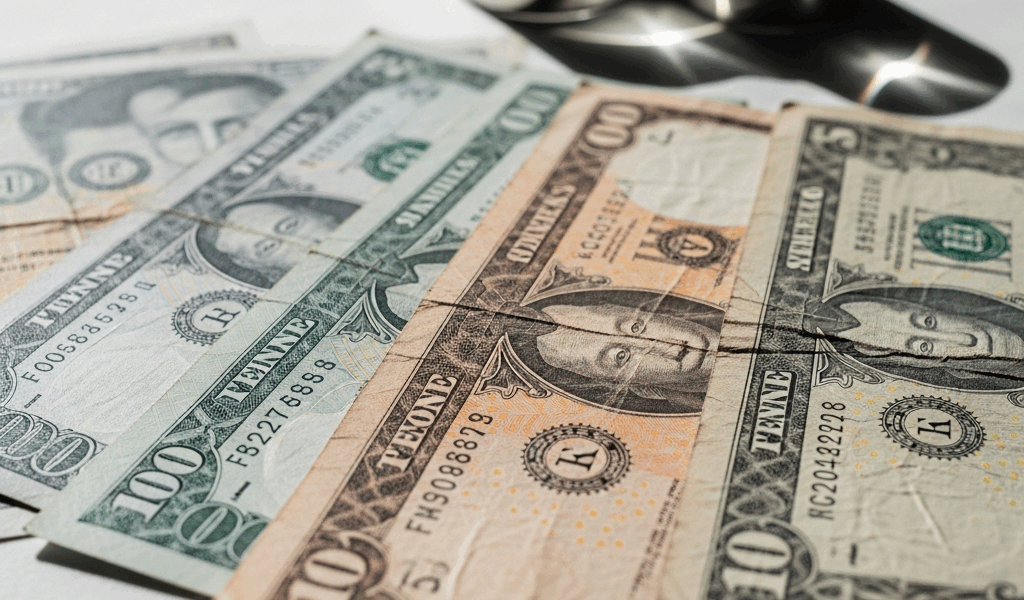
I remember the exact moment I understood currency grading. I was holding two $20 bills from 1950—both authentic, both from the same series. One had a crisp appearance with sharp corners and minimal wear. The other showed visible creases, faded color, and edge damage. At an auction preview, the first bill sold for $285. The second went for $42.
Same era. Same denomination. Completely different market value.
That experience taught me something most new collectors discover too late: how to grade currency condition like a pro collector isn’t about memorizing academic definitions. It’s about recognizing the physical markers that determine whether someone will pay premium prices or walk away from your collection. The numerical grading scale ranges from 1 to 70—where 1 represents a bill that’s barely recognizable and 70 represents a perfect specimen that likely never circulated. Most bills fall somewhere between 5 and 55 on this spectrum.
Here’s the implicit question I get asked constantly: “Should I just send this to PSA or PMG without knowing the grade first?” The answer is no, not necessarily. Understanding condition yourself prevents wasted submission fees on low-value notes and helps you spot genuinely rare finds worth professional certification. You’ll save money and make smarter collecting decisions.
The Five Key Areas Every Collector Should Inspect
Corners — The First Tell
Start with the four corners because they tell the most honest story about a bill’s handling history. Look at them under bright, direct light. A Mint-grade bill ($65+) will have corners so sharp you could theoretically cut yourself—no rounding, no softness at the edges. Just crisp, almost aggressive right angles.
Move down to Very Fine grades ($30-60). The corners here show the slightest rounding, visible under magnification but not to the naked eye from three feet away. At Fine condition ($15-30), corners are definitely rounded and soft. At Very Good ($8-15), you see visible wear that’s obvious without magnification.
Probably should have opened with this section, honestly—corners are the easiest grading indicator to assess consistently, and they rarely deceive. I’ve built my entire preliminary grading process around examining corners first because the pattern you find there usually predicts what you’ll discover elsewhere on the bill.
Edges — Where Friction Lives
The edges of a bill absorb more physical contact than anywhere else. They’ve been rubbed against wallets, fingers, and other bills for decades. High-grade bills show minimal edge wear—maybe a slight softening if you look closely. The edge maintains its original color and texture without that fuzzy appearance.
Circulated bills show clear edge wear. The paper fibers separate slightly, creating a worn look along the perimeter. You’ll see color loss where the ink has been abraded away. At lower grades, edges can show actual tears or significant paper loss. Run your finger along the edge (though ideally you avoid touching currency during inspection). Rough edges indicate circulation. Smooth edges suggest less handling history.
Center Fold Area — The Damage Zone
This is where I made my biggest grading mistake early on. I confused a light center fold crease with major structural damage and undergraded a 1928 $10 note by fifteen points. Learned that lesson the expensive way — paid $180 for a note that should have cost $320 if I’d graded it accurately.
The center fold area—the imaginary vertical line running through the middle of the bill—reveals how the note was stored. A single light crease running vertically doesn’t demolish grade like I thought. A Mint bill has zero creases. Very Fine bills tolerate one or two very light creases. Fine and lower grades show multiple creases, sometimes forming a grid pattern.
What matters is depth. Run your thumbnail gently across the crease. Does it catch? That indicates a deep fold. Does your fingernail slide smoothly across it? That’s a light impression that costs fewer grade points. Visual inspection alone isn’t enough here—you need tactile feedback, which is why handling practice matters so much.
Surface Wear — The Overall Canvas
This is the most subjective category, which is why consistency matters. Look at the entire front and back surfaces under bright light. Mint bills show no visible wear anywhere—the paper retains its original sheen. Very Fine bills show light surface wear concentrated in high-contact areas like the center and edges. Fine bills show general surface wear across both sides.
You’re looking for a few things: paper texture changes (does the surface feel fuzzy or is it crisp?), ink rubs (faded areas where the printed image has worn away), and light spots or marks. A single light surface mark doesn’t tank the grade. Multiple marks across both sides indicates heavier circulation.
Color and Brightness — The Aging Variable
This one confused me for years because I assumed any color loss meant lower grade. Not always true. Older bills naturally age — paper yellows, inks fade slightly. That’s natural aging. Staining is different, and this is where I’ve seen collectors misgrade catastrophically.
A Mint bill shows the original vibrant color — bright greens and blacks with no discoloration. Very Fine bills may show slight age-related color shift but maintain good brightness. Fine bills show noticeable yellowing and duller inks. The distinction matters.
Here’s the practical detail: actual stains (water damage, ink transfer, organic material) are different from natural aging. A water stain creates uneven discoloration in a specific area. Natural aging creates uniform color shift across the entire bill. Stains lower grade significantly. Natural aging is expected and factored into condition assessment.
Common Grading Mistakes That Tank Value
Let me walk you through the errors I’ve watched collectors make repeatedly, including myself.
Over-assessing minor creases as major damage. A single light center fold crease on a 1950s bill might drop the grade from 55 to 50. It doesn’t require capital punishment grading. I once downgraded a bill by twenty points for a crease that barely registered to the touch — that’s panic grading, and it’s wrong. Multiple deep creases forming a grid pattern? That’s legitimate grade reduction.
Confusing ink spots with actual stains. Sometimes older bills have small ink flecks from printing processes. These aren’t defects — they’re manufacturing artifacts. Actual stains have defined edges and uneven coloration. A pin-sized ink spot barely matters. A dime-sized stain in the corner matters substantially. The location changes the impact too — a stain on the portrait side damages value more than a stain in an empty corner area.
Misjudging color loss versus natural aging. I’ve watched collectors grade 1920s currency down aggressively because “the colors aren’t bright.” That’s not how aging works. Those bills are 100+ years old. Slight color shift is normal and expected. Dramatic fading isolated to one area suggests environmental damage or improper storage conditions. Gradual, uniform color change across the entire note is natural aging.
Touching the bill during inspection. This might sound obvious, but oils from your fingers create marks on paper. Handle currency only when absolutely necessary and only at the edges. I learned this after handling a $20 note too much during grading practice — my thumb created a visible mark on the surface that cost me several grade points. Now I inspect primarily visually with a loupe.
How to Know When Professional Grading Makes Sense
Not every bill deserves professional certification. Here’s my actual decision framework — the thinking I go through before submitting anything.
Is it rare? Rarity matters more than condition for certification value. A common 1970 $5 bill in Mint condition probably costs $10 ungraded and $25 slabbed — a $15 gain that doesn’t cover the $20-30 submission fee. A rare 1869 $1,000 bill in the same condition might be worth $800 ungraded and $3,200 slabbed. That slab suddenly makes financial sense.
Is it worth over $100 ungraded? If you’re confident in your grade assessment and the bill should be worth more than $100 in the current market, professional certification becomes economically rational. The third-party authentication adds credibility that justifies premium pricing to buyers who might otherwise hesitate.
Is it pre-1900? Older currency benefits substantially from professional grading. Collectors of older notes expect certification because authentication matters more for historical pieces. The cost-to-benefit ratio improves significantly with age.
The major players—PSA (Professional Sportscard Grading Company, now grade currency too), PMG (Paper Money Guarantee), and PCGS (Professional Coin Grading Service, which grades currency)—all use similar but slightly different standards. PMG tends toward slightly lower grades. PSA grades are generally mid-range. PCGS historically graded higher. This matters when you’re deciding which company to use.
Slabs add something real: authentication, grade insurance, and liquidity. A slabbed rare note sells faster and at higher prices because buyers don’t question authenticity. That’s value-added, not gatekeeping.
Building Your Grading Eye Over Time
Here’s what actually works: compare bills side-by-side. Get three notes from the same series and issue—one in rough condition, one in excellent condition, one in between. Study them together. The differences become obvious immediately. That visual comparison teaches more than reading descriptions ever could.
Start your practice with low-value notes. Use a $1 or $5 bill that costs $5-15. If you misgrade, the cost of learning is minimal. I built grading skills on common 1970s notes before I touched anything genuinely valuable. That progression matters.
Keep a reference collection. I maintain three notes from most series I collect — one Mint, one Very Fine, one Fine. I handle them frequently to calibrate my grading eye. My hands know what those grades feel like, look like, respond to when examined under magnification.
Accuracy improves with time and repeated practice. I grade faster and more consistently now than I did five years ago. But I’m still learning — last month I encountered a bill with unusual wear patterns I’d never seen before. Grading is a skill, not a credential. Skills compound through use.
You’ll develop confidence gradually. After fifty bills, you’ll notice patterns. After two hundred bills, you’ll spot grade-determining factors instantly. After five hundred bills, you’ll understand regional variation in wear and how storage conditions affect aging patterns. That’s professional-level knowledge without paying for certification.

Stay in the loop
Get the latest bank note buzz updates delivered to your inbox.