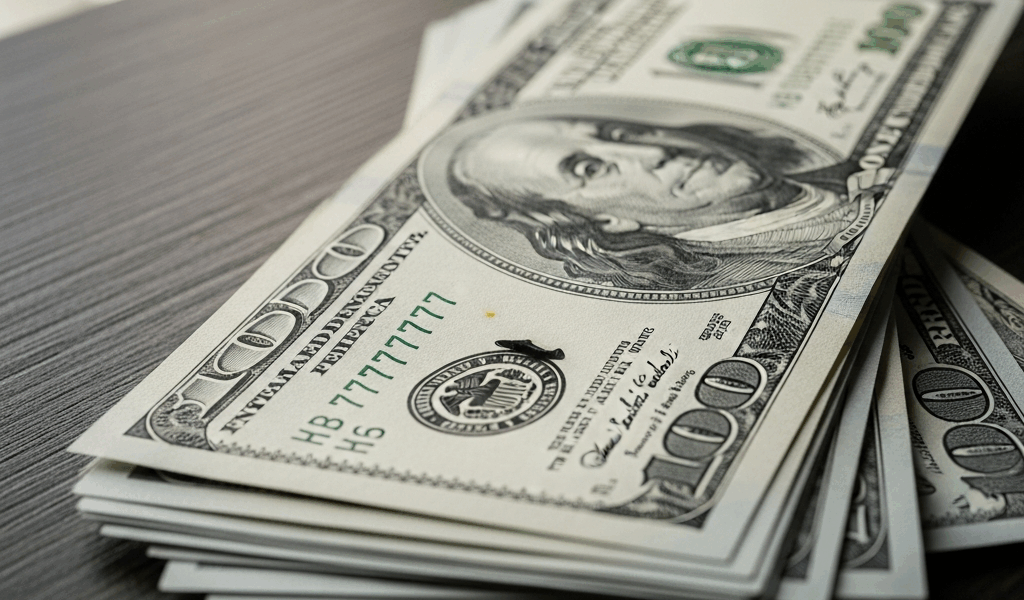
Fancy Serial Number Dollar Bills — What Makes a Serial Number Valuable?
Fancy serial number collecting has gotten complicated with all the misinformation flying around about what’s actually worth money. As someone who’s been digging through wallet bills and dealer tables for going on fourteen years, I learned everything there is to know about serial number collecting — mostly through embarrassing mistakes I’ll get into later. The question I field constantly is some version of “I found a weird serial number — is it valuable?” Sometimes the answer is a shrug. Sometimes it’s “yes, and please don’t spend that.” Here’s every major type I know of, what they’re selling for right now, and how to check your own wallet this afternoon.
What Makes a Serial Number Fancy
But what is a fancy serial number? In essence, it’s any serial number with an unusual or visually interesting pattern that collectors find more desirable than a random string of digits. But it’s much more than that — there are entire subcommunities built around specific pattern types, each with its own price logic and collector base. The Federal Reserve isn’t stamping “fancy” on anything. That’s pure collector shorthand, passed down through currency shows and online forums.
Radar Notes
A radar note reads identically forwards and backwards — a numeric palindrome. The serial number 27199172 is a radar. So is 10111101. The name comes from the word “radar” itself being a palindrome, which is either inspired or completely obvious depending on your mood. These are probably the entry point for most casual collectors — rare enough to feel like a discovery, common enough that people actually stumble onto them. A standard radar on a circulated $1 bill moves in the $5–$25 range, sometimes more if the number looks visually clean and satisfying.
Repeater Notes
Repeaters have a serial number where a sequence repeats itself — the classic example being something like 47474747, where the first four digits come back around as the second four. Dealer catalogs sometimes call these “double repeaters.” Then there are super repeaters, where a two-digit pattern cycles four times: 19191919. That’s what makes super repeaters endearing to us collectors — they’re just so visually satisfying. A crisp uncirculated super repeater on a $100 bill has cleared $1,000 on eBay, though $50–$200 is more realistic for common denominations in average shape.
Solid Notes
Solid serial numbers are exactly what they sound like. Every digit is identical. 11111111. 77777777. 99999999. The odds of any specific solid number appearing are roughly 1 in 11 million — extraordinarily rare. I’ve personally held exactly one in my hands, and it wasn’t even mine. A dealer at a Baltimore coin show in 2019 had a solid 8 on a $20 bill — circulated but intact — priced at $2,800. It didn’t move that weekend. Uncirculated examples of solid 1s or solid 8s on higher-denomination bills regularly exceed $10,000 at auction. These are the pinnacle of the fancy serial number world, full stop.
Ladder Notes
A perfect ladder runs 12345678 or 87654321 — sequential digits, ascending or descending. Crowd-pleasers. Easy to explain to someone who’s never heard of this hobby, genuinely scarce, visually clean. Ascending ladders tend to sell slightly above descending ones, though honestly I’ve never found a rational explanation for that preference beyond aesthetics. Expect $400–$800 for a crisp $1 bill ladder in near-uncirculated condition. Circulated examples run $150–$300. Near-ladders — one digit off from perfect — fetch $10–$50 but are a much harder sell than people expect going in.
Binary Notes
Binary serial numbers use only two different digits across all eight positions. 10110100 qualifies. So does 22122212. Here’s a common misconception worth clearing up: the two digits don’t have to be 0 and 1. Any two digits count. That said, collectors call notes using only actual zeros and ones “true binary” — 01001101, for example — and those carry a premium because they look like actual binary code. True binary in decent shape fetches $20–$75. Standard binary with any two digits is more common, typically $5–$30.
Birthday Notes
Birthday notes match a specific calendar date — usually someone’s birth date, an anniversary, or a historically significant day. The serial number 07041776 represents July 4th, 1776. Format is typically MMDDYYYY or MMDDYY. These have exploded on eBay because the marketing writes itself — you’re not selling a dollar bill, you’re selling a personalized gift for someone’s 40th birthday. Average birthday notes in good condition sell $10–$50, but milestone dates — January 1, 2000, December 7, 1941 — can fetch considerably more from the right buyer.
Low Serial Numbers
Any serial number below 00000100 qualifies as a low number note. The lower the number, the higher the value — simple enough. Serial number 00000001 is the holy grail, a “one of one” in collector terminology. A $1 bill with that number in circulated condition sold for just over $4,700 at Heritage Auctions in 2021. Numbers 00000001 through 00000009 are called “super low” and command serious premiums. The 00000010–00000099 range is still genuinely valuable — $50–$500 depending on denomination and condition — just more accessible than the single-digit tier.
High Serial Numbers
High serial numbers mirror the appeal of low ones. The ceiling is 99999999 — one copy per print run. Numbers between 99999900 and 99999999 sit in premium high serial territory and sell in ranges roughly comparable to their low-number counterparts. There’s something psychologically satisfying about either extreme, apparently, and the collector market prices accordingly.
Star Notes
Probably should have opened with this section, honestly, since it clears up a lot of confusion. Star notes aren’t technically a fancy serial number type — they’re replacement notes printed when a standard note gets damaged during production. A star symbol replaces the last letter suffix in the serial number. Most common star notes carry a small premium, $2–$10. But short-run star notes from specific Federal Reserve districts — runs under 640,000 notes — can sell $50–$500. Find a star note that also has a fancy serial number and you’re holding something genuinely exciting. These get lumped into fancy serial discussions constantly, so leaving them out felt dishonest.
Miscellaneous Patterns — Bookends, Rotators, and More
Beyond the main categories are some niche types worth knowing. Bookend notes carry the same digits on both ends — 13XXXX13, for instance. Rotator notes read identically when the bill is rotated 180 degrees, which requires very specific digit combinations and makes them quite rare. Seven-of-a-kind notes have seven identical digits and one outlier — 22222212. These niche types have smaller collector bases but dedicated ones, and values bounce around depending on who happens to be hunting at any given moment.
Value by Serial Number Type
Values shift constantly with the market, but the table below reflects realistic ranges based on eBay completed listings, currency shows, and professional dealer transactions over the past few years. These assume $1 bills in average circulated to fine condition unless noted. Higher denominations multiply value significantly.
| Type | Example | Approximate Value Range |
|---|---|---|
| Solid | 88888888 | $1,500–$15,000+ |
| Perfect Ladder (ascending) | 12345678 | $200–$800 |
| Perfect Ladder (descending) | 87654321 | $150–$600 |
| Super Low (00000001–00000009) | 00000003 | $500–$5,000+ |
| Low (00000010–00000099) | 00000047 | $50–$500 |
| Super Repeater | 19191919 | $75–$400 |
| Radar | 27199172 | $5–$50 |
| Repeater | 47474747 | $20–$100 |
| True Binary (0s and 1s only) | 01001101 | $20–$100 |
| Binary (any two digits) | 33733373 | $5–$30 |
| Birthday Note | 07041976 | $10–$75 |
| Seven of a Kind | 55555545 | $25–$150 |
| Near Solid (six of a kind) | 44444434 | $10–$60 |
| Star Note (short run) | B00013427* | $25–$500 |
| High Number (99999900+) | 99999923 | $50–$300 |
Condition matters enormously here. A solid note graded PMG or PCGS gem uncirculated 65 or higher is worth multiples of the same note in fine condition. Handle anything you think might be valuable by the edges only. Don’t fold it. Don’t clean it. Don’t press it flat.
Don’t make my mistake. Early in my collecting life, I slid a slightly wrinkled radar note under a stack of books for two weeks before bringing it to a dealer — figured I was doing it a favor. He explained immediately what I’d done wrong. The crease pattern shifted from a natural fold to a pressed flat, and experienced graders can spot that difference. It dropped the note’s perceived grade and the number the dealer was willing to offer. Learned that one the hard way, standing in a slightly too-warm shop on a Tuesday afternoon.
How to Check Your Bills
You don’t need software or special equipment for this. Start with whatever’s in your wallet right now. The eight-digit serial number appears twice on the face of the bill — once on the left, once on the right. Either one works.
Here’s a quick mental checklist — ten seconds per bill, tops:
- All the same digit? — Solid note. Stop everything.
- 12345678 or 87654321? — Perfect ladder. Excellent find.
- Reads the same forwards and backwards? — Radar note.
- First four digits repeat as the second four? — Repeater or super repeater.
- Only two different digits used throughout? — Binary note.
- Starts with 00000? — Low serial number, worth investigating further.
- Ends with 99999? — High serial number territory.
- Matches a date in MMDDYYYY format? — Potential birthday note.
- Serial number ends in a star (*)? — Star note, check the run size.
Frustrated by constantly missing good notes after hearing about them secondhand, one collector I know started checking every bill that passed through his register at a diner in Columbus, Ohio — he worked there all through college, scanning serial numbers between breakfast rushes using a notepad and a pen — and pulled out over sixty fancy serial number notes across three years. One repeater on a $50 bill eventually sold for $180. The method works. It requires consistency more than anything else.
For star note run sizes, mystarnotechecker.com lets you input the serial number and district letter to find out how many replacement notes were printed in that run. Short runs — under 640,000 notes — are the ones worth holding onto. Runs over 3.2 million are common and carry little to no premium.
For everything else, the Paper Money Forum at papermoneyforum.com is active and knowledgeable. Post a clear photo of the front of your bill and someone will typically give you an honest assessment within a day or so.
Where to Sell Fancy Serial Number Bills
The market for these notes is real but specific. Not every venue suits every type of note equally well.
eBay
eBay is the most active marketplace for fancy serial number currency — full stop. The search volume is there, buyers know exactly what they’re hunting, and completed listings give you the clearest picture of what the market will actually pay versus what sellers hope it will pay. List with clear photos of both sides, specify the denomination, Federal Reserve district letter, and series year. For notes under $100, a seven-day auction format works well. For anything above $200, buy-it-now with best offer enabled tends to draw more serious buyers.
The fees matter — eBay takes roughly 12.9% on currency sales as of mid-2024, plus payment processing. Factor that into your floor before you list.
Currency Shows
The Professional Currency Dealers Association hosts shows around the country, and the major Memphis paper money show every June draws serious collectors and dealers from across the country. Shows work better for high-value notes where buyers want to see the piece in person before committing. A solid note or a perfect ladder will attract genuine interest from multiple dealers at a large show — competitive attention that sometimes pushes prices above what eBay would generate. Smaller regional coin and currency shows are useful for mid-range notes in the $50–$300 range. Dealers there are buying for resale, so offers will be wholesale, but the transaction is immediate and requires zero shipping anxiety.
Professional Currency Dealers
For high-value notes, contacting established dealers directly is worth considering. Heritage Auctions handles major currency pieces and consistently gets strong realized prices for top-tier material. Stack’s Bowers is another reputable house. Both offer consignment options — they sell on your behalf for a commission. For a solid note or a gem-condition perfect ladder, auction house exposure can meaningfully outperform what eBay alone would generate.
What Sells Best — and What Doesn’t
Solids, perfect ladders, super low serial numbers, and short-run star notes move fast when priced correctly. The market for these is deep and consistent. Birthday notes sell well but require patient marketing — you’re waiting for the specific buyer rather than any buyer. Standard radar notes and binary notes do sell, just slowly and at modest premiums. A $1 radar note is not going to change your financial situation.
Near-ladders might be the best example of collector disappointment, as fancy serial number collecting requires managing expectations carefully. That is because one digit off from perfect sounds close but feels far to serious buyers — and their offers reflect that. Non-super repeaters on low denominations and binary notes with visually boring digit combinations (all 3s and 4s, say) fall into the same category. Price these for a quick sale rather than holding out for a premium that probably isn’t coming.
Condition grading through PMG (Paper Money Guaranty) or PCGS Currency adds credibility and typically increases realized prices for notes worth $200 or more — the grading fee starts to make economic sense at that threshold. Below that, a clean ungraded note with good photos sells just fine.
A fancy serial pattern and a replacement-note star are separate value factors. See how to identify and research star notes before comparing prices.

Stay in the loop
Get the latest bank note buzz updates delivered to your inbox.