Getting Started with Coin Collecting
When I started collecting coins seriously, my system was basically “throw everything in a shoebox.” This worked until the shoebox overflowed, at which point I had hundreds of coins with no idea what any of them were worth or even exactly what I had. Learning to organize properly would have saved me months of later sorting. Here’s what I wish I’d known from the beginning.

Fundamentals of Coin Collection Organization
Before you acquire another coin, make a basic decision: what are you actually collecting? Trying to save everything becomes impossible quickly. Maybe you focus on US coins from a particular era, or coins from countries you’ve visited, or coins featuring certain themes. This focus gives you direction and makes organization natural.
I eventually settled on pre-1965 US silver coins plus anything from the Caribbean. That’s narrow enough to be manageable but broad enough to keep things interesting. Your focus might be completely different, and that’s fine. What matters is having one.
Supplies for Coin Collecting
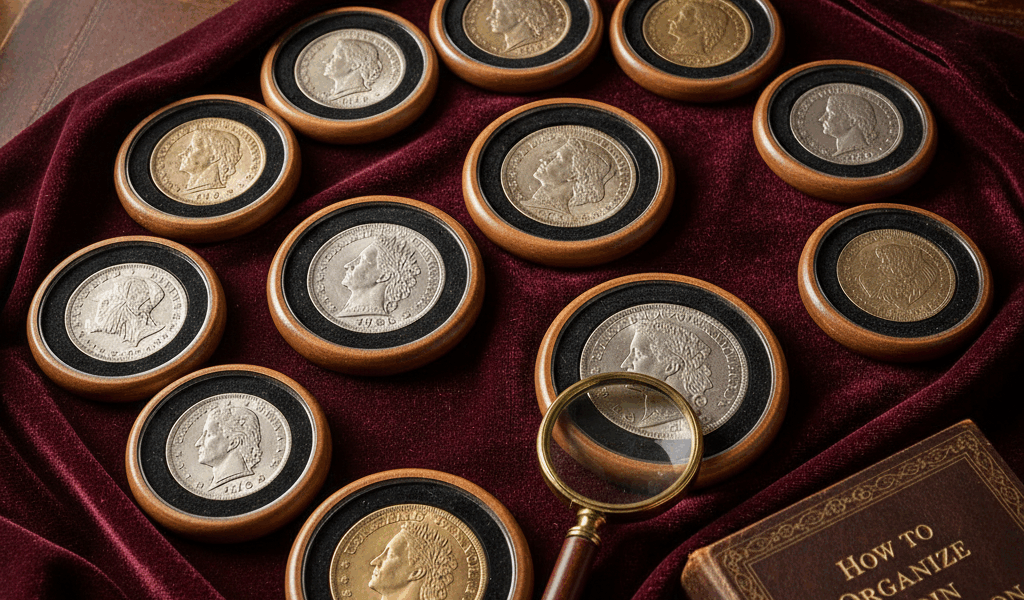
Right tools matter. I ruined a couple of coins through improper handling before learning better. Cotton gloves prevent oils from your skin reaching coin surfaces. Proper holders – whether 2×2 cardboard flips, plastic capsules, or album pages – protect from environmental damage.
Storage solutions depend on collection size. Small collections fit in albums or boxes. Larger ones might require filing systems or even climate-controlled storage. Start with whatever works for your current holdings and upgrade as the collection grows.
Navigating Coin Grading
Grading confused me for years. The basic concept is simple – how much wear has the coin experienced? – but the application involves nuances that take time to learn. An uncirculated coin straight from the mint rates higher than one that spent years in pocket change.
The Sheldon scale runs from 1 to 70, with 70 being theoretically perfect. Most circulated coins fall between 1 and 50; uncirculated pieces rate 60 and above. Learning to roughly estimate grade helps you understand value and decide how carefully particular coins need handling.
Cataloging Your Coins
Once my collection exceeded a couple hundred pieces, cataloging became essential. You can’t remember everything about every coin. A simple spreadsheet works: coin type, year, mint mark, condition estimate, value estimate, and when/where acquired. Photos help too – they let you reference coins without handling them repeatedly.
This documentation becomes crucial for insurance purposes, selling decisions, and simply knowing what you have. I’ve bought duplicate coins I forgot I already owned. Good records prevent that waste.
Using Coin Collecting Software
Several software packages exist specifically for numismatists. Programs like CoinManage or OpenNumismat provide databases with pre-loaded coin information, image storage, and reporting features. They’re overkill for beginners but become valuable as collections grow.
I resisted software for years, preferring spreadsheets. Eventually the convenience of pre-populated databases and automatic valuations won me over. Try free options first to see if the structured approach works for your style.
Appraisals and Insurance for Your Collection
At some point – probably sooner than you expect – your collection becomes valuable enough to insure. Standard homeowner’s policies often exclude or severely limit collectibles coverage. You’ll need specific riders or separate policies.
Insurance requires documentation. Professional appraisals establish value for coverage purposes. Keep records updated as the collection grows. Photos and serial number lists provide evidence if claims become necessary. The paperwork is tedious but essential.
Attending Coin Shows and Auctions
My first coin show was overwhelming – hundreds of dealers, thousands of coins, no idea where to start. By my tenth show, I knew which dealers specialized in what I collected and could navigate efficiently. That learning curve is normal.
Shows provide opportunities to see coins in person before buying, compare prices across dealers, and learn from conversations. Auctions offer access to pieces that rarely appear on the open market. Both are worth your time once you’ve developed enough knowledge to participate meaningfully.
Organization isn’t the exciting part of collecting – hunting for coins, researching history, making acquisitions, that’s the fun stuff. But good organization enables everything else. It protects what you’ve invested in and makes the collection genuinely useful rather than just a pile of metal in a drawer.
Recommended Collecting Supplies
This section includes affiliate links. We may earn a commission at no extra cost to you.



Stay in the loop
Get the latest bank note buzz updates delivered to your inbox.