Today, I will share it all with you.
Japan unveiled revolutionary new banknotes in 2024 featuring three-dimensional holographic portraits that appear to turn and follow your gaze. These cutting-edge security features set new global standards—and created new challenges for collectors distinguishing genuine notes from counterfeits.
Japan’s 2024 Currency Revolution
The ¥10,000, ¥5,000, and ¥1,000 notes feature completely redesigned imagery and security technology representing the current global state-of-the-art.
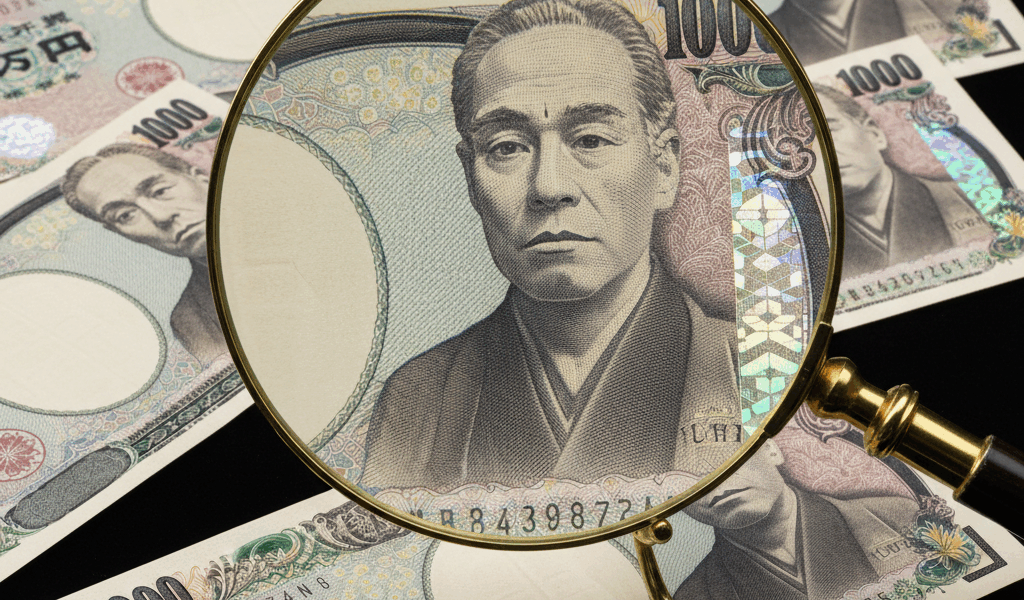
The star feature is “3D holographic portraits”—world-first technology creating three-dimensional images that appear to move as viewing angle changes. The ¥10,000 shows Shibusawa Eiichi, the “father of Japanese capitalism,” whose image seems to turn and gaze at different angles. Similar technology appears on the ¥5,000 (Tsuda Umeko) and ¥1,000 (Kitasato Shibasaburo).
These aren’t static holograms like credit cards have. The depth and motion create effects impossible to replicate with current counterfeiting technology. The portraits genuinely appear three-dimensional, with highlights and shadows shifting naturally as you tilt the note.
Additional Security Layers
Watermarks show extremely detailed portraits visible when held to light. The technology has advanced significantly, displaying portrait details approaching photographic quality. These aren’t your grandfather’s watermarks.
Tactile elements help visually impaired users and provide authentication touchpoints. Raised printing creates textured areas that feel distinct from surrounding paper. The denomination appears in tactile form allowing identification by touch.
Color-shifting inks change hue with viewing angle. Microprinting contains text too small to reproduce with standard equipment. UV-fluorescent features become visible under blacklight. Each layer creates additional barriers for counterfeiters.
How to Authenticate Japanese Currency
The 3D portrait provides the quickest authenticity check. Tilt the note while observing the holographic window. The portrait should display smooth, natural movement—the face turns, shadows shift, the effect is unmistakable. Flat, static, or jerky hologram effects indicate counterfeits.
Watermark examination requires holding notes to light. Look for the detailed portrait watermark and denominational bars. These should appear as subtle variations in paper density, not printed additions. Quality varies even among genuine notes, but the watermark area should feel identical to surrounding paper.
Touch tells truth. Run fingers across tactile elements. Genuine raised printing feels crisp and distinct. Counterfeit attempts typically feel wrong—either too rough (printed texture) or too smooth (absent features). Regular handling of genuine notes develops recognition of correct tactile qualities.
Collecting Japan’s New Currency
First-issue notes from July 2024 attract collector interest. Serial numbers from early production runs—particularly low numbers or significant patterns—command premiums. Bank-fresh notes in consecutive sequence demonstrate the technology while providing sets for trading.
Replacement notes exist for Japanese currency as for U.S. notes. Identifying the Japanese equivalent of star notes requires familiarity with Bank of Japan numbering conventions. These replacement notes are inherently scarcer than regular issues.
Complete denomination sets provide natural collection structure. Assembling ¥1,000, ¥5,000, and ¥10,000 in Uncirculated condition documents the 2024 redesign comprehensively. Adding the previous series for comparison shows technological evolution.
Global Security Technology Trends
Japan’s holographic portraits represent one approach to next-generation currency security. Other nations have pursued different technologies. Switzerland uses glowing inks and complex surface features. Australia pioneered polymer notes with transparent windows.
Technology transfer occurs gradually. Innovations proven in one nation often appear elsewhere in subsequent years. Japan’s 3D technology may influence designs worldwide as other central banks observe its effectiveness.
Collectors benefit from technological diversity. Assembling notes featuring different security approaches creates collections documenting global anti-counterfeiting evolution. Japan’s 2024 issue represents a significant milestone.
Verification Resources
The Bank of Japan provides official authentication guides. Their website includes videos demonstrating how genuine notes behave when tilted. Comparing questionable notes against official demonstrations helps identify counterfeits.
Currency detector devices have updated for the new series. UV lights, magnifiers, and automated detection machines calibrated for 2024 features provide technological authentication support.
Collector communities share authentication experiences. Forums and social media groups focused on Japanese currency discuss identification techniques and report encountered counterfeits. This community knowledge helps individual collectors recognize problems before purchasing questionable material.
Japan’s 2024 banknote release demonstrates that paper currency continues evolving technologically. Far from becoming obsolete in a digital age, physical money incorporates increasingly sophisticated features that challenge counterfeiters while rewarding collectors who appreciate the intersection of art, technology, and monetary history.

Stay in the loop
Get the latest bank note buzz updates delivered to your inbox.