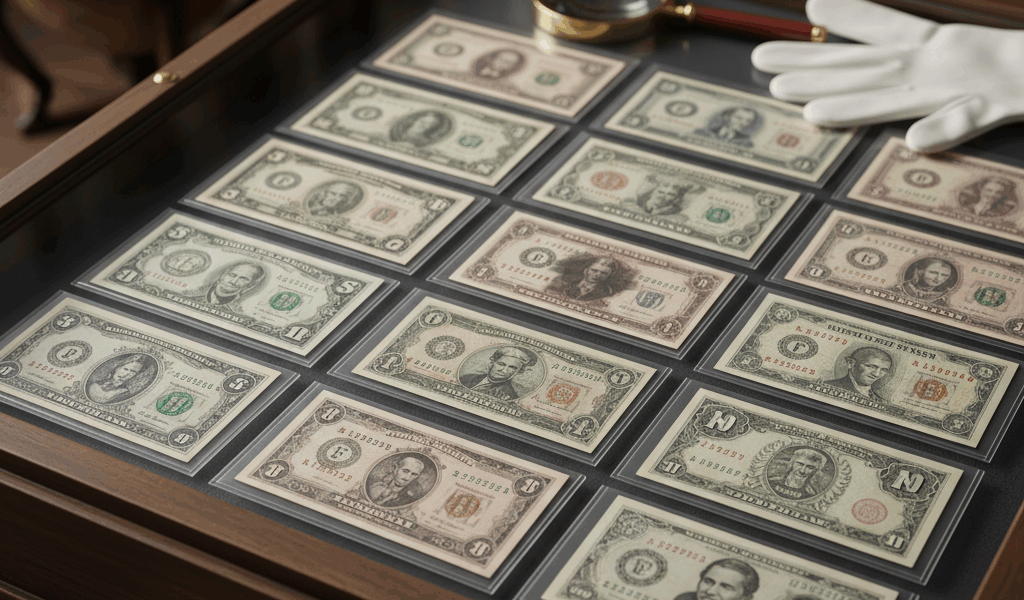
Error currency fascinates collectors because it represents the exceptions that prove the rule. The Bureau of Engraving and Printing produces billions of notes annually with remarkable consistency, but occasionally something goes wrong. Miscuts, misaligned prints, missing elements, and other production errors create notes unlike any others—unique pieces that somehow escaped quality control. This guide explains what error collectors look for, how different errors occur, and what determines their value.
Why Errors Happen
Modern currency production involves multiple printing stages, cutting operations, and quality checks. Errors can occur at any point in this complex process.
The Printing Process
Currency notes receive multiple impressions. The back is printed first in green ink (the “back plate” impression). Then the face receives black ink printing (the “face plate” impression). Finally, Treasury seals and serial numbers are added in a third printing pass.
Each stage presents error opportunities. Paper might feed incorrectly, plates might shift, or ink coverage might vary. Most errors are caught and destroyed, but some slip through.
Cutting and Processing
Printed sheets are cut into individual notes. Cutting errors create misaligned notes, notes with portions of adjacent notes visible, or notes with unusual dimensions. Packaging and counting machinery can also damage notes in ways that occasionally reach circulation.
Quality Control Limitations
Despite extensive inspection, the sheer volume of production means some errors escape detection. A single shift can produce millions of notes. Catching every imperfection is statistically impossible.
Major Error Categories
Error collectors organize defects into established categories. Understanding these categories helps identify and value the errors you encounter.
Printing Errors
These errors occur during the actual printing process.
Offset Printing Errors: When a sheet fails to feed, ink transfers to the impression cylinder and then prints onto the back of the next sheet. This creates a mirror image of the front design on the back, or vice versa. Offset errors range from faint partial transfers to complete face-to-back offsets.
Ink Smears: Excess ink or mechanical problems create smears, blobs, or drag marks across the note. Minor smears have modest value; dramatic examples command significant premiums.
Insufficient Inking: Partial inking leaves portions of the design faint or missing. The effect can be subtle (slightly light printing) or dramatic (major design elements missing).
Overinking: Too much ink creates heavy, dark printing with potential bleeding of design elements. Extreme examples show ink seeping through the paper.
Double Impressions: The paper receives the same printing twice, usually slightly offset. Genuine double impressions show complete second impressions, not just slight doubling from plate shift.
Third Printing Errors
The third printing adds Treasury seals and serial numbers. Errors at this stage are relatively common.
Mismatched Serial Numbers: Each note receives two serial numbers that should match. Rarely, one digit differs between them. These mismatched serials are popular with collectors.
Missing Printing: Notes that miss the third printing entirely lack seals and serial numbers. These “missing print” errors are dramatic and valuable.
Partial Third Printing: Only part of the serial and seal area prints, leaving portions missing or incomplete.
Shifted Third Printing: The third printing appears in the wrong location—perhaps across the portrait or into the margin area.
Inverted Third Printing: Serial numbers and seals appear upside down relative to the rest of the note. These are scarce and valuable.
Cutting Errors
Errors during the cutting process create dimensionally unusual notes.
Miscuts: Notes cut off-center, showing extra margin on one side and less on another. Minor miscuts are common; extreme examples showing portions of adjacent notes are more valuable.
Cutting Through Design: Severely miscut notes might show design elements from two different notes—half of one serial number and half of another, for example.
Gutter Folds: Paper folds before cutting, creating notes with an unprinted strip where the fold blocked ink. When unfolded, these notes appear larger than standard.
Butterfly Folds: Similar to gutter folds but the paper folds in a way that creates a symmetrical unprinted area, resembling butterfly wings when unfolded.
Paper Errors
Sometimes the paper itself causes problems.
Foreign Objects: Material trapped between the paper and printing plate blocks ink transfer. The object might be paper scraps, tape, threads, or other debris. The blocked area shows no printing.
Blank Back or Blank Face: A paper fold during printing can leave one side completely blank. These dramatic errors are scarce and valuable.
Printed Folds: Paper folds during printing, receives the impression while folded, then unfolds. Part of the design appears in the wrong location. Large printed folds are spectacular errors.
Inverts
The holy grail of error collecting. Inverted notes have one element printed upside down relative to others.
Inverted Back: The back design prints upside down compared to the face. True inverted backs are extremely rare on modern currency.
Inverted Overprint: On notes with overprints (like Hawaii or North Africa emergency issues), the overprint appears inverted. These are famous and valuable.
Evaluating Error Notes
Error value depends on several factors beyond just the error type.
Severity and Visibility
More dramatic errors command higher prices. A slight miscut adds a few dollars; a severe miscut showing half the adjacent note adds hundreds. A faint offset might bring $50; a complete face-to-back offset could exceed $1,000.
Visibility matters too. Errors that “show well” when displayed attract more collector interest than subtle defects requiring explanation.
Type Rarity
Some error types are genuinely rare. Inverted backs on modern notes are nearly impossible to find. Missing print errors are scarce. Simple miscuts occur relatively often.
Rarity drives pricing more than almost any other factor. A modest example of a rare error type might exceed a spectacular example of a common type.
Note Condition
Error collectors generally prefer uncirculated notes, though this matters less than for regular issues. A dramatic error in VF condition often outsells a minor error in Gem Uncirculated.
That said, condition still affects value. Uncirculated examples of any error type bring premiums over circulated equivalents.
Eye Appeal
Subjective but important. Two similar errors might differ in visual impact. The more attractive example will typically sell for more.
Denomination
Higher denomination errors sometimes bring premiums simply because they’re scarcer. Fewer $100 bills circulate through collectors’ hands than $1 bills, so errors on large denominations are encountered less often.
Authentication
Third-party grading provides authentication and detailed error descriptions. PMG and PCGS Currency both grade error notes. Certification adds confidence for buyers and often improves resale potential.
Finding Error Notes
Error collectors acquire notes through several channels.
Searching Currency
The traditional method: obtain new notes from banks and search for errors. This requires volume—examining thousands of notes to find occasional errors. The advent of automatic currency processing has reduced errors reaching circulation, making this approach less productive than historically.
Dealer Inventory
Specialized error dealers maintain inventories of certified and raw errors. Their expertise helps identify and describe errors accurately. Expect to pay retail markup for the convenience and authentication.
Auctions
Major auction houses regularly offer error currency. Heritage and Stack’s Bowers include error sections in their currency auctions. Auction results provide pricing guidance for similar errors.
Collector Networks
Error collectors share finds and duplicates through organizations and online forums. Building relationships within the error collecting community provides access to material and knowledge.
Common Mistakes
New error collectors often make predictable errors.
Confusing Damage with Errors
Post-production damage doesn’t qualify as a collectible error. A note someone folded after receiving it isn’t a “fold error.” A note that got wet isn’t a “printing error.” Genuine errors occur during production.
Overvaluing Minor Errors
Slight miscuts, minor ink variations, and subtle oddities have modest value. Online listings often overstate prices for common minor errors. Check actual sales records, not asking prices.
Missing Authentication Importance
Sophisticated fakes exist. Someone can create a fake “missing print” error by chemically removing ink. Third-party authentication protects against manufactured errors.
Ignoring Market Cycles
Error collecting has hot and cold periods. Prices for certain error types fluctuate with collector interest. Patient buyers sometimes find better deals during market lulls.
Building an Error Collection
Start with clear goals. Do you want one example of each major error type? Do you prefer errors on a specific denomination? Are you interested in the most dramatic examples regardless of type?
Begin modestly with more common errors to learn the market. Third printing errors and simple miscuts provide affordable entry points. As your knowledge grows, move toward scarcer and more spectacular examples.
Document your collection thoroughly. Error descriptions matter—future buyers will want to know exactly what they’re purchasing. Certification provides standardized descriptions; if keeping notes raw, develop your own detailed records.
Connect with other error collectors. The specialized knowledge within the error community exceeds what general currency dealers typically possess. Organizations like the Bureau Issues Association focus specifically on modern currency including errors.
Most importantly, collect what interests you. Error currency appeals to those who appreciate the unusual and unexpected. Let your collection reflect your particular fascination with production mistakes that created unique pieces of currency history.


Stay in the loop
Get the latest bank note buzz updates delivered to your inbox.