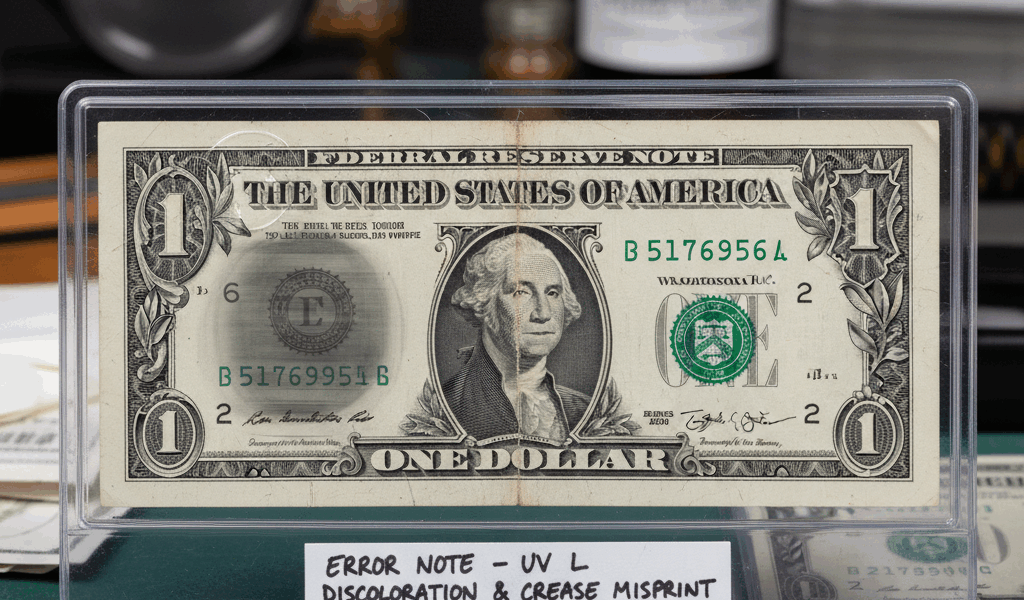
As someone who has watched collections degrade from preventable mistakes—including learning some hard lessons with my own notes—I learned everything there is to know about what actually damages paper money. Today, I will share it all with you.
Ultraviolet light fades inks, weakens paper fibers, and accelerates aging in ways that can’t be reversed.
How Light Destroys Paper Money
Sunlight contains ultraviolet radiation that breaks chemical bonds in inks and paper. The fading happens gradually—imperceptibly day by day—but accumulates devastatingly over months and years. Vibrant reds fade to pink. Sharp blacks become muddy gray. Crisp paper yellows and becomes brittle.
Fluorescent lighting shares UV properties with sunlight. Those bright office tubes and workshop lights contain UV components. LED lights produce less UV but aren’t entirely safe. Any light exposure accelerates aging; UV-rich light accelerates it dramatically.
The damage is irreversible. Faded inks cannot be restored. Weakened paper cannot regain strength. Collectors sometimes attempt “restoration” through chemical treatment, but these processes typically create additional damage. Prevention is the only effective strategy.
Humidity: The Silent Destroyer
Paper money absorbs and releases moisture based on environmental humidity. High humidity promotes mold growth, causes paper expansion, and accelerates chemical degradation. Low humidity makes paper brittle and prone to cracking.
Ideal storage humidity ranges from 35-45%. Basements and attics—common storage locations—typically fail this standard. Basements tend toward excess humidity; attics experience temperature swings that cause humidity fluctuation.
Mold damage proves particularly insidious. Fungal growth may not be visible until severe, yet microscopic mold degrades paper structure. Musty odors indicate fungal presence even when visible growth hasn’t appeared. Once established, mold spreads to adjacent notes in storage.
Temperature Considerations
Heat accelerates all chemical reactions, including paper degradation. Storing currency in hot environments—attics, garages, cars—dramatically shortens lifespan. The combination of heat and humidity proves especially destructive, creating conditions where paper essentially accelerates toward decay.
Temperature stability matters as much as absolute levels. Cycling between hot and cold causes paper to expand and contract, weakening fibers. Storage locations with consistent conditions outperform those with wider temperature swings, even if average temperatures are similar.
Handling Mistakes
Human skin contains oils and acids that transfer to paper during handling. Fingerprints may not be immediately visible but develop over time as oils oxidize. The damage appears as brown marks following finger patterns—a permanent reminder of improper handling.
Cotton gloves prevent direct skin contact. Clean, lint-free cotton gloves have become standard for serious collectors. Any barrier between fingers and paper prevents transfer damage.
Edge handling minimizes contact even when ungloved. Hold notes by corners rather than faces. Support notes from below when moving them. Never slide notes across surfaces—even minor abrasion affects condition.
Storage Material Hazards
PVC plastic destroys paper money. Polyvinyl chloride releases acids as it degrades, and these acids attack paper and ink. Some older holders, particularly flexible vinyl flips from decades past, contained PVC. Notes stored in these develop haze, discoloration, and permanent damage.
Mylar (polyester) provides safe storage. Mylar sleeves and holders are chemically inert—they don’t release harmful compounds or react with currency. High-quality Mylar holders maintain their properties indefinitely.
Acid-free paper matters for long-term storage. Regular cardboard and paper contain lignin, which produces acids as it ages. Currency stored in regular envelopes or boxes contacts these acids continuously.
Display vs. Preservation
Display and preservation often conflict. Frames on walls expose notes to light. Cases in sunny rooms accumulate heat. The dramatic presentation that makes collections impressive simultaneously damages them.
Compromise approaches exist. UV-filtering glass blocks harmful radiation while allowing visible light. Rotation displays—showing some notes while others rest in dark storage—limits individual exposure. Digital photography provides display copies while originals remain protected.
For valuable or irreplaceable notes, prioritize preservation over display. Professional museums limit light exposure strictly, rotating exhibits to give objects rest periods. The display isn’t worth watching your collection fade.
Creating Proper Storage
Ideal home storage combines temperature stability, humidity control, darkness, and quality materials. A climate-controlled closet in living space often works well. Add a humidity monitor to track conditions. Store notes in archival boxes within the dark closet.
Safe deposit boxes provide excellent conditions. Bank vaults maintain stable temperature and humidity while providing complete darkness and security. The annual cost is modest compared to collection values.
Whatever storage you choose, monitor conditions. Inexpensive digital hygrometers track temperature and humidity. Check stored collections periodically for problems. Catching mold early, identifying deteriorating holders, and responding to condition changes prevents minor issues from becoming disasters.

Stay in the loop
Get the latest bank note buzz updates delivered to your inbox.