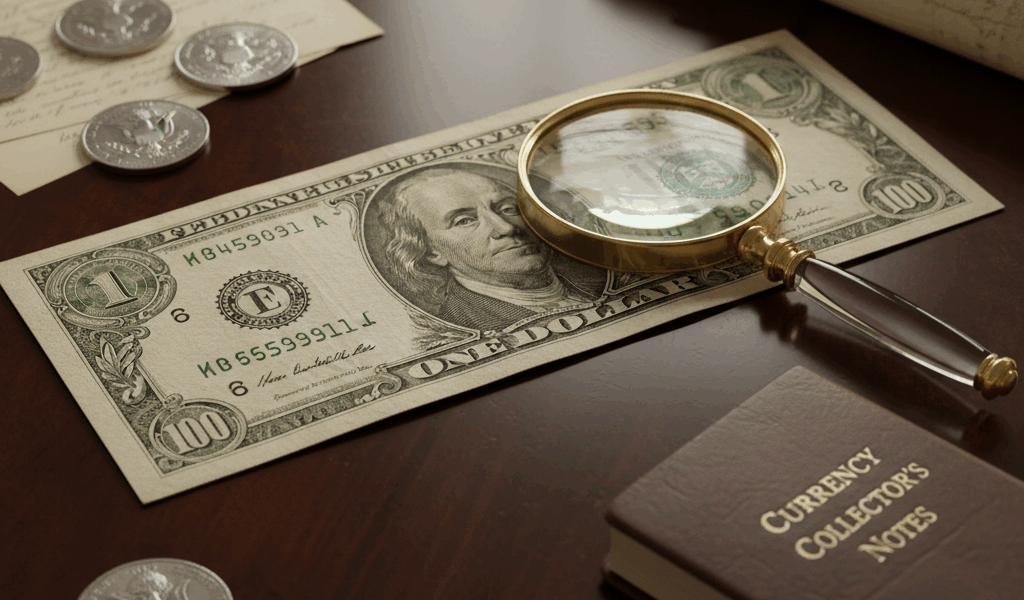
As someone who has handled tens of thousands of notes over the years—and caught my share of fakes—I learned everything there is to know about what actually matters when checking $100 bills. Today, I will share it all with you.
The $100 bill contains ten distinct security features—many invisible to casual observation. The most counterfeited denomination in American currency has become the most technologically sophisticated, with innovations that make perfect replication nearly impossible.
The 3D Security Ribbon
This isn’t printed on—it’s physically embedded within the paper structure. Tilt the note and watch tiny 100s and liberty bells shift and move within the ribbon.
Under magnification, you see why this works. Hundreds of thousands of microlenses create different images depending on viewing angle. No commercial printing technology can reproduce this effect. Counterfeiters either omit the ribbon (obvious fake) or print a static version (detectable immediately by tilting).
Color-Shifting Ink
The large 100 in the lower-right corner uses optically variable ink that shifts from copper to green when tilted. This technology has become more sophisticated over time—current iterations display more dramatic color shifts and are harder to simulate.
Testing is simple: tilt the note under good light. The color change should be immediate and pronounced. Static colors indicate counterfeits. Some fakes attempt color-shifting effects with metallic inks, but the color range and transition quality always differ from genuine notes.
Watermarks
Hold the $100 to light and look at the blank space right of the portrait. A faint Benjamin Franklin should appear—a watermark created during paper manufacturing by varying paper thickness. This is in the paper, not printed on it.
A second watermark shows 100 on the right edge. Fakes often show watermarks as shadow prints rather than true paper-density variations.
Security Thread
A thin embedded strip runs vertically through the note, visible when held to light. The thread shows “USA 100” repeatedly along its length. Under ultraviolet light, this thread glows pink.
Each denomination has its thread in a different position with different text and UV color. The $100’s pink UV glow, left-of-center position, and specific text are unique to this denomination. Wrong thread positions, text, or UV colors mean counterfeits.
Microprinting
Tiny text too small to read without magnification appears throughout the bill. “THE UNITED STATES OF AMERICA” wraps around Franklin’s collar. “USA 100” appears within several design elements. “ONE HUNDRED USA” runs along the golden quill.
Standard printers can’t reproduce microprinting legibly—the text blurs into lines. Examining under 5-10x magnification reveals whether microprinting appears as readable text (genuine) or blurry lines (counterfeit). This feature dates back decades but remains effective.
Raised Printing
Run your finger across the $100 bill. Genuine currency feels distinctly textured—you can feel letters and lines as raised elements. This intaglio printing presses ink into paper under tremendous pressure, creating tactile features that photocopying can’t replicate.
Franklin’s shoulder particularly shows this raised effect. The “ONE HUNDRED DOLLARS” text has distinct tactile presence. New notes feel crispier; circulation wears this down but never eliminates it entirely. Complete smoothness suggests extreme wear or counterfeit origin.
Color and Paper
The $100 uses specific paper containing red and blue security fibers scattered randomly throughout. These fibers are embedded in the paper, not printed on the surface. Magnification shows fibers running through the paper structure rather than sitting on top.
The color palette uses proprietary inks. Commercial inks attempting to match fall short under careful comparison. Side-by-side examination with known genuine notes reveals color discrepancies that become obvious once you know what to look for.
Additional Features
The inkwell to the left of the portrait contains a color-shifting liberty bell. As you tilt the note, the bell appears and disappears. This combines with the 3D ribbon to create multiple movement-based authentication points.
Infrared properties invisible without specialized equipment provide another security layer. Banks and large retailers use infrared detection devices for automatic verification. You can’t test these casually, but they provide commercial authentication.
Verification in Practice
Not every transaction requires checking ten features. Quick authentication focuses on the most reliable indicators: tilt the note to see the 3D ribbon move, check the color-shifting 100, and feel for raised printing. These three tests catch most counterfeits in seconds.
Thorough examination adds watermark inspection, UV light testing, and microprinting verification. Major transactions or suspicious notes warrant this additional scrutiny. Currency detector pens provide a quick additional check, though sophisticated counterfeits sometimes defeat them.
The $100 bill’s security features represent decades of anti-counterfeiting evolution. Each redesign makes the previous generation of counterfeits obsolete. Knowing these features protects you from fakes while providing appreciation for the engineering behind everyday money.


Stay in the loop
Get the latest bank note buzz updates delivered to your inbox.