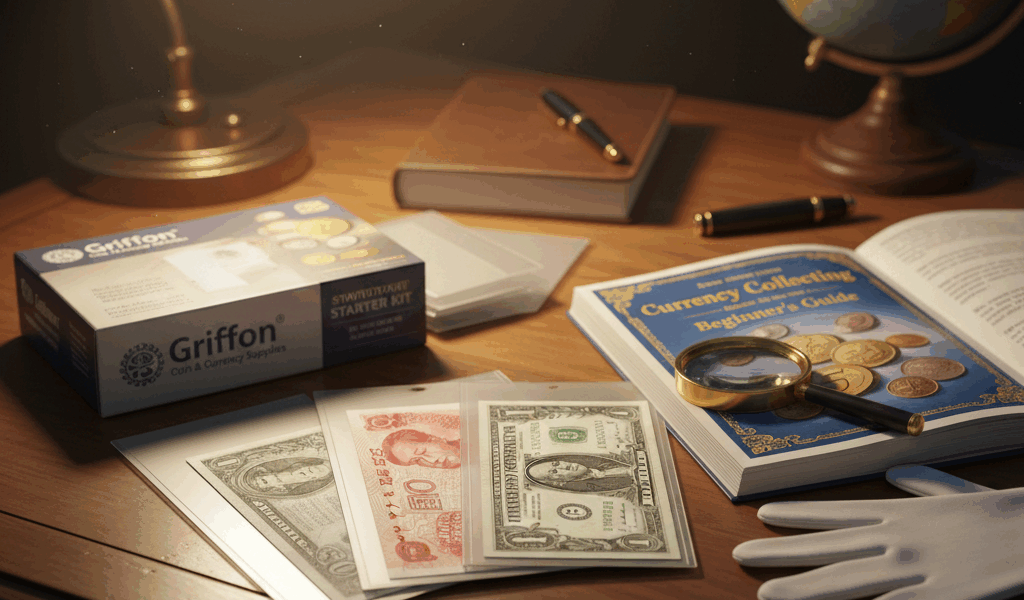
Starting a currency collection feels overwhelming. Thousands of different notes exist, prices range from pocket change to house payments, and specialized terminology fills every reference book. This guide walks you through building a meaningful collection from scratch, whether you’re interested in casual accumulating or serious investment-grade acquisitions.
Before You Buy: Define Your Goals
Skip this section at your peril. Unfocused collecting leads to disorganized boxes of random notes that bring neither satisfaction nor value. Spend time thinking about what you actually want from this hobby.
Casual Interest vs. Serious Collecting
Some people want a few interesting notes to display—conversation pieces that look attractive and carry historical significance. Others build comprehensive collections documenting every variety of a particular series. Both approaches are valid, but they require different strategies and budgets.
Casual collectors might spend a few hundred dollars total and enjoy their notes for years. Serious collectors routinely spend thousands and measure their collections against published catalogs. Know which camp you’re joining before committing money.
Choosing a Focus
The most satisfying collections have focus. Consider these approaches:
Type collecting: Acquire one example of each major design type. A complete type set of small-size U.S. currency includes perhaps 30-40 notes spanning Legal Tender, Silver Certificates, Gold Certificates, Federal Reserve Notes, and more. Most can be acquired in collectible grades for modest sums.
Date/series collecting: Collect every date and signature combination within a specific type. This approach can be expensive—some combinations are rare—but creates comprehensive documentation of the series.
Denomination collecting: Focus on a single denomination across all types and eras. A $5 collection might include Colonial, Continental, Confederate, large-size, and small-size notes.
Geographic collecting: Collect notes from your home state, hometown, or a region that interests you. National Bank Notes offer rich geographic possibilities.
Topical collecting: Collect notes featuring ships, famous portraits, particular vignettes, or other themes that interest you.
Having focus doesn’t mean ignoring interesting notes outside your specialty. Many collectors maintain a core focused collection while also keeping a “fun file” of random acquisitions.
Setting a Budget
Currency collecting scales to nearly any budget, but realistic expectations prevent disappointment. Here’s what different spending levels typically achieve:
$100-500: A nice starter collection of common circulated notes—perhaps 10-20 pieces including various types and denominations. Nothing rare, but good representative examples.
$500-2,000: Room to include some better-grade notes, unusual types, or moderately scarce varieties. A solid type collection in VF-EF grades becomes possible.
$2,000-10,000: Serious collecting territory. High-grade common notes, genuine rarities in lower grades, or comprehensive series collecting becomes achievable.
$10,000+: Access to significant notes—high-denomination Gold Certificates, rare National Bank Notes, gem-grade type notes, and other serious pieces.
Start smaller than you think. Learn the market before committing significant funds. The education from buying a dozen $20 notes teaches more than theory ever could.
Learning the Basics
Knowledge protects your money better than any other factor. Invest time learning before spending significantly.
Essential References
Every currency collector should own certain reference books:
Standard Catalog of United States Paper Money (Krause Publications): The primary price and identification guide, updated annually. Essential for identifying varieties and establishing baseline values.
Paper Money of the United States (Friedberg): The standard reference, now in its 22nd edition. More technical than Krause, with detailed variety information.
Specialized references: Once you choose a focus, specialty references become valuable. National Bank Note collectors use Kelly’s catalog; Confederate collectors reference Criswell; large-size type collectors may want Hessler.
Don’t buy references all at once. Start with one general guide and add specialty references as your interests narrow.
Online Resources
The internet provides valuable (free) learning opportunities:
Completed auction records: Heritage Auctions, Stack’s Bowers, and other major houses publish results. Study what similar notes actually sold for—not dealer asking prices—to understand real values.
Collector forums: Online communities let you ask questions, share discoveries, and learn from experienced collectors. Lurk first to understand community norms before posting.
Grading company population reports: PMG and PCGS publish data on how many notes they’ve graded in each category. This helps assess relative rarity.
BEP resources: The Bureau of Engraving and Printing provides production data, historical information, and educational material about currency.
Handling and Storage
Proper handling protects your investment. Learn these basics before acquiring notes:
Clean, dry hands: Oils, moisture, and dirt transfer from skin to paper, causing damage over time. Some collectors use cotton gloves, though opinions vary on necessity.
Edge handling: Hold notes by the edges, never touching the design surface. This minimizes transfer of oils and reduces fingerprints.
Flat storage: Notes should lie flat in protective holders, not bent, folded, or crammed into overstuffed albums.
Climate control: Avoid extreme temperatures, high humidity, and rapid environmental changes. Basements and attics are poor storage locations.
Archival materials only: Use holders specifically designed for currency. Avoid PVC-containing plastics, which chemically damage paper over time.
Where to Buy
Multiple channels offer currency for purchase. Each has advantages and risks.
Major Auction Houses
Heritage Auctions, Stack’s Bowers, and similar major houses handle significant currency sales. Advantages include authentication, accurate descriptions, buyer protections, and access to high-quality material. Disadvantages include buyer’s premiums (typically 20%+) and competition that can drive prices above retail.
Auctions work well for higher-end purchases where authentication and documentation matter. They’re less ideal for common, inexpensive notes where premiums eat into value.
Established Dealers
Reputable currency dealers offer expertise, authentication, and return policies. Find dealers through collector organizations, major shows, or referrals from other collectors.
Dealer prices typically run higher than auction results—they must profit to stay in business. The premium buys convenience, expertise, and the ability to examine notes before purchasing.
Beware of unknown online sellers. The field attracts scammers. Stick to dealers with established reputations until you develop enough knowledge to assess risk independently.
Coin Shows and Currency Shows
Major shows bring hundreds of dealers together. You can examine notes in person, compare prices, and build relationships with sellers. Shows like the FUN show (Florida), ANA conventions, and the Memphis Paper Money Show attract serious dealers and collectors.
Show buying works best when you know what you’re looking for. Wandering without focus leads to impulse purchases. Come with a list, compare prices across multiple dealers, and don’t feel pressured to buy immediately.
Online Marketplaces
eBay and similar platforms offer convenience and sometimes good values. Risks include counterfeits, misgraded notes, and sellers who exaggerate condition. Third-party graded notes reduce (but don’t eliminate) authentication risk.
Check seller feedback carefully. Avoid new sellers with no track record. Understand that photos may not reveal every flaw. Use buyer protection when available.
Other Collectors
Fellow collectors sometimes sell duplicates or reduce their collections. These transactions can offer fair prices and interesting notes. Join collector organizations and forums to connect with potential sellers.
Private transactions lack the protections of dealer purchases. Know your seller or accept the risk. Get clear photos and written condition descriptions before sending money.
Understanding Pricing
Currency pricing confuses newcomers. The same note type might list for $200 at one dealer and $75 at another. Understanding why helps you buy wisely.
Catalog Values vs. Market Prices
Price guides list “catalog values”—theoretical prices based on market observation. Actual transaction prices vary. Some notes trade below catalog; scarce notes may exceed catalog significantly.
Use catalog values as starting points, not gospel. Cross-reference with actual sales data from auction archives.
Condition Dramatically Affects Price
A single point of grade difference can double price for sought-after notes. A 64 EPQ might cost $400 while a 65 EPQ brings $1,200. Learn to assess condition accurately before paying premium prices for premium grades.
Rarity and Demand Intersect
Rare notes aren’t automatically expensive. A rare variety that nobody collects may sit unsold at modest prices. Common notes that everyone wants can command premiums due to demand.
The most expensive notes combine genuine rarity with strong demand—key dates, popular types, exceptional condition, and historical significance.
Authentication Costs
Certified (slabbed) notes typically cost more than raw equivalents. Some premium reflects authentication value; some reflects the selection bias (better notes get submitted). Consider certification costs when comparing raw vs. certified prices.
Building Intelligently
With knowledge in place, here’s how to actually build a collection that satisfies.
Start Cheap
Begin with inexpensive notes. Common small-size types from the 1930s-1960s offer excellent learning opportunities for $10-50 each. Make mistakes with small money while developing your eye and knowledge.
Buy Quality Over Quantity
Ten well-chosen notes in excellent condition beat fifty random pieces in poor grades. Focus on the best notes you can afford rather than filling boxes with mediocrity.
This applies especially as you advance. Once you know what you want, save for quality rather than settling for lesser examples.
Document Everything
Keep records of what you buy, when, from whom, and for how much. Photograph your notes. This documentation helps with insurance, resale, and tracking your collection’s development.
Upgrade When Possible
As you learn and your budget grows, replace lower-grade notes with better examples. The VF you bought while learning might give way to an EF, then perhaps an AU. Sell or trade the earlier acquisitions to fund upgrades.
Be Patient
The perfect note appears when you’re not expecting it. Don’t force purchases out of impatience. Save for quality, wait for opportunities, and let your collection develop organically over years rather than months.
Beyond Buying: Enjoying Your Collection
Currency collecting offers rewards beyond ownership.
Join Organizations
The Professional Currency Dealers Association (PCDA) and Society of Paper Money Collectors (SPMC) connect enthusiasts. Membership provides publications, access to experts, and community.
Attend Shows
Even without buying, shows offer education and social connection. Meet dealers, examine notes beyond your budget, and absorb knowledge from the community.
Share Your Knowledge
As you learn, help newer collectors. Answer questions on forums. Write about your specialty. Teaching deepens understanding and contributes to the hobby’s vitality.
Display and Enjoy
Notes aren’t meant to hide in boxes forever. Proper display lets you appreciate what you’ve built. Just ensure display methods protect notes from light damage and physical harm.
Currency collecting rewards patience, study, and thoughtful acquisition. Start modestly, learn constantly, and build deliberately. Twenty years from now, you’ll have both a valuable collection and the expertise to appreciate it fully.



Stay in the loop
Get the latest bank note buzz updates delivered to your inbox.