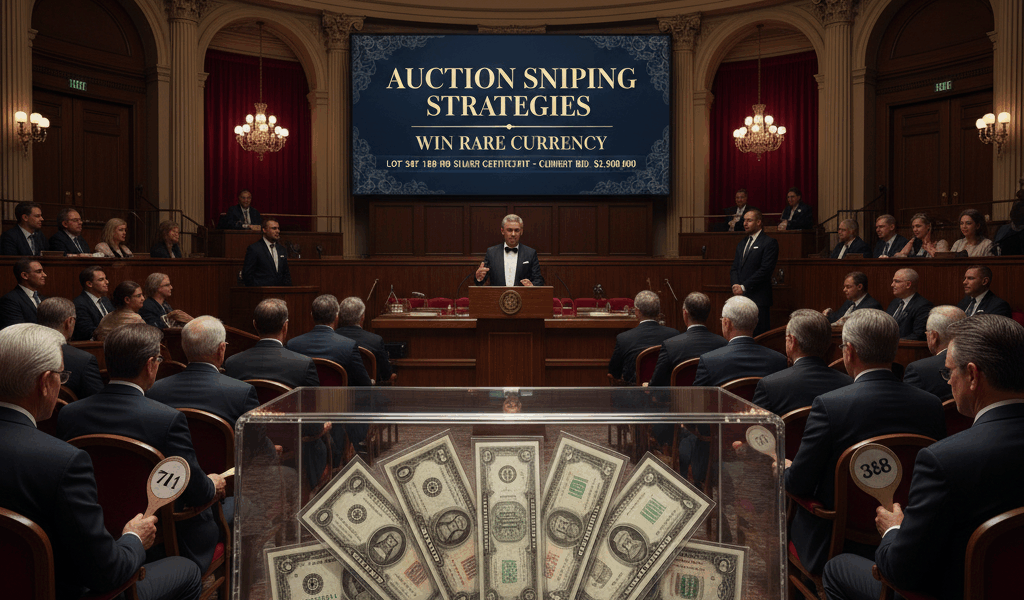
Today, I will share it all with you.
How Online Auctions Actually Work
Online currency auctions run for days or weeks, but activity clusters in two periods—early bidding that sets price floors, and the final minutes where competition explodes.
Early bidders reveal intentions. When you bid three days before closing, you’re signaling to every competitor that you want this note. They see your interest and may decide to challenge you. That information leak costs money.
Late bidding—sniping—solves this problem. A bid placed in the final seconds doesn’t give competitors time to respond. The auction closes before anyone can escalate. You win at a lower price than a bidding war would have produced.
The Mechanics of Sniping
First, decide your true maximum. Research comparable sales, study the note’s condition, and determine what it’s worth to you. Write that number down. This is your ceiling regardless of what happens in the auction.
Then wait until the last possible moment to submit that maximum. “Last possible moment” varies by platform—some extend auctions when late bids arrive, others don’t. Learn your platform’s rules before the auction matters.
Sniping software can help. Services like Gixen submit eBay bids automatically at times you specify. Your bid arrives precisely when you planned, eliminating the human factor. I use these tools regularly when I can’t be present for closing.
When Sniping Actually Works
They planned to bid incrementally but never got the chance.
Relatively common notes reward patience. If similar pieces appear regularly, losing this auction means catching the next one. Why drive prices up with early bidding? Wait for opportunities instead of creating bidding wars.
Lot timing matters too. When multiple auctions close within seconds of each other, collectors monitoring different lots can’t react to everything. Your snipe might succeed because your competitor was focused elsewhere.
When Sniping Fails
High-demand rarities attract prepared competition. Five collectors might all plan to snipe the same note. When everyone has predetermined maximums, timing doesn’t matter—the highest number wins regardless of when bids arrive.
Proxy bidding limits effectiveness. Major platforms let bidders enter maximums in advance. If the current high bidder has a $5,000 maximum and you snipe $4,000, the system instantly beats you. You’ve revealed interest without winning anything.
Extension rules defeat pure sniping on some platforms. Heritage extends auctions after late bids, giving everyone time to respond. Your clever timing becomes irrelevant when the auction just keeps going.
Defending Against Snipers
When you expect sniping attempts on a lot you want, bid your true maximum early. Let the proxy system defend you. Late bids below your maximum lose automatically. Don’t hold back hoping to save money—save yourself the stress instead.
Be present for final minutes on important lots. If the platform allows extensions, you can respond to snipe attempts. Watching the closing lets you participate in any escalation rather than getting surprised.
Learn to identify competitors. Watching who bids on similar notes reveals your likely competition. Recognize aggressive collectors on a lot? Maybe bid early to discourage them rather than trying to snipe against prepared opponents.
Platform Rules Matter
Heritage extends lots that receive bids in final minutes. This anti-sniping mechanism means everyone eventually gets to bid their maximum. Strategy shifts toward knowing your true value rather than timing tricks.
eBay closes at fixed times no matter what. Pure sniping works here because late bids can win without response opportunity. Timing precision matters more than on other platforms.
Great Collections uses live ascending-bid auctions for significant lots. Real-time competition means sniping doesn’t apply—you see competitors bid and respond immediately. Strategy becomes reading other bidders and knowing when to stop.
The Community Factor
Sniping is legal and everyone knows it happens. Platforms design systems expecting this behavior. Bidders who dislike sniping can protect themselves with proxy bids. Nobody’s being cheated.
That said, you’ll see the same collectors at shows and online for years. Extremely aggressive tactics against people you’ll interact with repeatedly can create tension. I’ve watched collecting friendships sour over auction behavior. Balance winning against maintaining relationships.
Ultimately, auction success comes from research, discipline, and knowing when to walk away. Understand what notes are worth before bidding. Match tactics to competition levels. Stick to your predetermined maximum no matter how exciting things get. Those fundamentals beat any timing trick.



Stay in the loop
Get the latest bank note buzz updates delivered to your inbox.