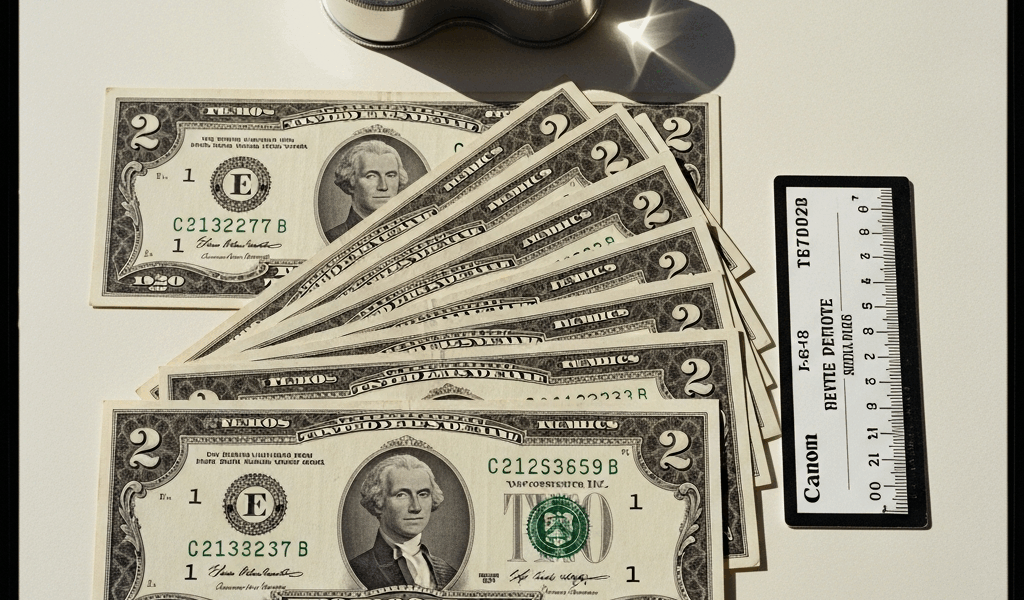
What Makes a 1928 Red Seal Two Dollar Bill
Two dollar bill collecting has gotten complicated with all the misinformation flying around. As someone who spent three years deep in small-denomination red seal notes, I learned everything there is to know about the 1928 variants. Today, I will share it all with you.
But what is a 1928 red seal two dollar bill, exactly? In essence, it’s a Legal Tender Note — not a Federal Reserve Note. But it’s much more than that distinction on paper. That label carries real weight in the collector’s market, separating these bills from everything that came after them.
No Federal Reserve district letters. No bank markings. What you get instead is a bold red seal, red serial numbers, and a Treasury seal sitting centered on the right side. That stripped-down design signals the tail end of an older currency era — which is exactly why collectors hunt them down. The 1928 series simply doesn’t look like the twos that followed it. Not even close.
Physically, these bills measure 6.14 inches by 2.61 inches. Thomas Jefferson on the front. Monticello on the back. Simple. Iconic. Valuable in the right condition and series.
Value by Series Letter 1928 Through 1928G
Here’s where most websites fail collectors completely. They slap a generic “$15–$50” range across every 1928 red seal two and call it research. Real collector work breaks this down by each series letter — scarcity varies wildly between them. Don’t make my mistake. I once bought what I thought was a bargain 1928E, paid what seemed fair, and discovered I’d overpaid by $40 because I hadn’t checked circulation numbers first.
1928 Original Issue
The original 1928 — no letter suffix — is the most common of the bunch. Print run was high. Circulated examples in Fine condition sell for $18–$35. Extremely Fine runs $40–$80. Uncirculated notes command $120–$250, depending on centering and paper freshness. Star notes jump that range hard: a 1928 star in Fine sells for $60–$120. Uncirculated 1928 stars touch $400–$600. Good starting point for new collectors.
1928A Series
Slightly tighter than the original. Fine condition lands at $20–$45. Extremely Fine: $50–$100. Uncirculated: $150–$300. Star notes in Fine fetch $80–$150, and uncirculated stars climb to $450–$750. Still findable without much effort, but the step up in value reflects a lower production run.
1928B Series
This is the sweet spot for collectors on a budget — honestly, my favorite entry point. The 1928B printed in volume, so you won’t be hunting for months. Fine circulated: $18–$40. Extremely Fine: $45–$90. Uncirculated: $130–$280. Star notes in Fine: $65–$130. Stars uncirculated: $380–$620. Building a complete series set? Start here.
1928C Series
Production dipped noticeably with this letter. Fine: $25–$55. Extremely Fine: $65–$120. Uncirculated: $180–$350. Stars in Fine: $100–$180. Stars uncirculated: $500–$800. That’s what makes 1928C endearing to us series collectors — it’s the first place real scarcity kicks in.
1928D Series
Entering genuine rarity territory here. Fine: $40–$80. Extremely Fine: $100–$180. Uncirculated: $250–$450. Stars in Fine: $150–$250. Stars uncirculated: $700–$1,100. Finding a 1928D takes patience. I’m apparently the type who enjoys that kind of hunt, and tracking one down at a 2019 currency show in Columbus for $45 Fine still felt like a win.
1928E Series
Scarce. This is exactly where I made my mistake years back. Fine: $60–$120. Extremely Fine: $140–$260. Uncirculated: $350–$600. Star notes in Fine: $200–$350. Stars uncirculated: $900–$1,400. The print run was restricted compared to the earlier letters — and most casual sellers don’t know that.
1928F Series
Genuinely hard to locate. Probably should have opened with this section, honestly — collectors obsess over 1928F availability more than any other letter in the run. Fine: $80–$150. Extremely Fine: $180–$320. Uncirculated: $450–$750. Stars in Fine: $280–$450. Stars uncirculated: $1,200–$1,800. When one surfaces at a show, it doesn’t last long.
1928G Series
The rarest. Full stop. Fine: $120–$250. Extremely Fine: $300–$500. Uncirculated: $600–$1,000. Star notes in Fine: $400–$700. Stars uncirculated: $1,600–$2,400. These don’t turn up often. When they do, dealers snatch them before most collectors even hear about it. So, without further ado, let’s talk about how to grade what you’ve got — because condition determines whether these numbers apply to your note at all.
How to Grade Your 1928 Red Seal Two Dollar Bill
Before you sell or insure your note, you need an honest condition assessment. Grading determines value more than anything else — the difference between Fine and Extremely Fine alone is $20–$100 per note depending on series. That adds up fast across a collection.
Poor to Good Condition
Heavy creasing. Stains. Tears. Fading. Corners soft and rounded, serial numbers barely legible. If your note looks like it survived a wash cycle — and some literally have — it lives here. Realistically, these sell for $10–$15 regardless of series letter. Fine for display or for collectors just getting started, but premiums don’t happen at this grade.
Fine Condition
One major fold line, sometimes two. Moderate wear at corners and edges. Ink hasn’t faded dramatically, but it’s not crisp either. Serial numbers still read clearly. The bill holds its shape. No major stains or tears. This is where most circulated notes actually land. Your 1928B Fine is a $20–$40 note. Your 1928F Fine is $80–$150. Big difference — same grade, different letter.
Extremely Fine
Light circulation only. Maybe one barely-there fold. Corners show minimal rounding. Paper is bright, details are sharp, serial numbers crisp. No tears. Perhaps a faint spot or two — nothing major. When you hold it, the bill feels relatively stiff. This grade commands real premiums. A 1928B Extremely Fine pulls $45–$90. A 1928F hits $180–$320. Worth the effort to distinguish from Fine.
Uncirculated
Zero circulation. No folds whatsoever. Crisp corners with sharp points. Vibrant red seal and serial numbers. Design properly centered on the paper. No stains, no tears, no wear of any kind. Fresh paper feel — you’ll know it when you hold one. This is the holy grail. A 1928 original uncirculated runs $130–$250. A 1928G uncirculated reaches $600–$1,000. Collectors search for years chasing these.
One tip that genuinely changed my grading accuracy: compare your note side-by-side with graded examples in Heritage Auctions’ archive. Free access, no account required. You’ll calibrate your eye within minutes, not months.
Star Notes and What They Add to Value
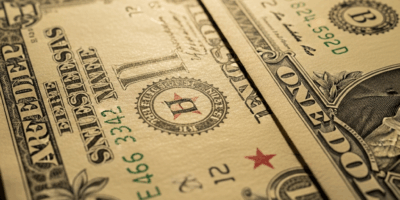
Star notes exist because the Bureau of Engraving and Printing needed a way to replace misprinted or damaged currency mid-run. When a bill failed quality control, they’d substitute a replacement note carrying a star suffix on the serial number. Instead of 12345678, you’d see 12345678*. That asterisk means fewer were printed. Lower supply. Higher collector demand.
The premium varies by series scarcity. On common series like 1928B, a star note in Fine sells for roughly $65–$130 versus $20–$40 for a regular issue. Double, sometimes triple. On rare series like 1928F, the gap widens considerably — a 1928F star Fine at $280–$450 versus a regular 1928F Fine at $80–$150 represents a 300–450% premium. That’s what makes star notes endearing to us collectors: they’re scarce by design, not by accident.
Uncirculated stars command even larger premiums. A 1928B star uncirculated sold for $620 last year versus $280 for a regular 1928B uncirculated. That’s real money sitting in a difference of one small asterisk.
I handled a 1928A star in Extremely Fine last spring. The seller originally asked $200 — fair, honestly. It sold for $160 within two weeks. The same note without a star would have moved for $50–$90. That star alone accounted for $70–$110 of the final sale price. Don’t underestimate them.
Where Collectors Actually Buy and Sell These Notes
Heritage Auctions dominates the high-end market. They handle most notes graded PCGS or PMG 64 and above — prices there reflect serious competition between dealers and serious collectors. If you own a 1928F or 1928G uncirculated, Heritage is your venue. Period.
Stack’s Bowers also runs regular currency auctions. Hammer prices there tend slightly lower than Heritage for raw notes, but marginally so. Both houses charge buyer’s premium — usually 15–20% — so factor that into your math before bidding.
eBay completed listings are your free research tool. Search “1928 red seal two dollar bill,” filter by sold items, sort by price. You’ll see what actually sold last week, not what dealers are hoping to get today. Asking prices mean nothing. Sold prices tell the story. I’m apparently the type who checks these obsessively before every purchase, and it’s never steered me wrong.
Currency shows — the in-person kind — are underrated. Dealers negotiate there. You’ll find 1928 twos priced $10–$20 below internet quotes because dealers want cash that day, not a prolonged eBay listing. I bought a 1928D Fine for $45 at a show in 2021 when identical notes online were listed at $65. Don’t overlook them.
Raw notes — meaning ungraded — typically sell for 20–40% less than PCGS or PMG certified equivalents at the same condition. Buyers trust third-party graders. Certification adds verification, and verification adds money. If you’re selling, consider submitting for grading if your note is Extremely Fine or better. Below that grade, the certification cost — usually $15–$30 per note — eats into whatever profit you’d clear. First, you should calculate that math honestly — at least if you want the effort to be worth it.

Stay in the loop
Get the latest bank note buzz updates delivered to your inbox.