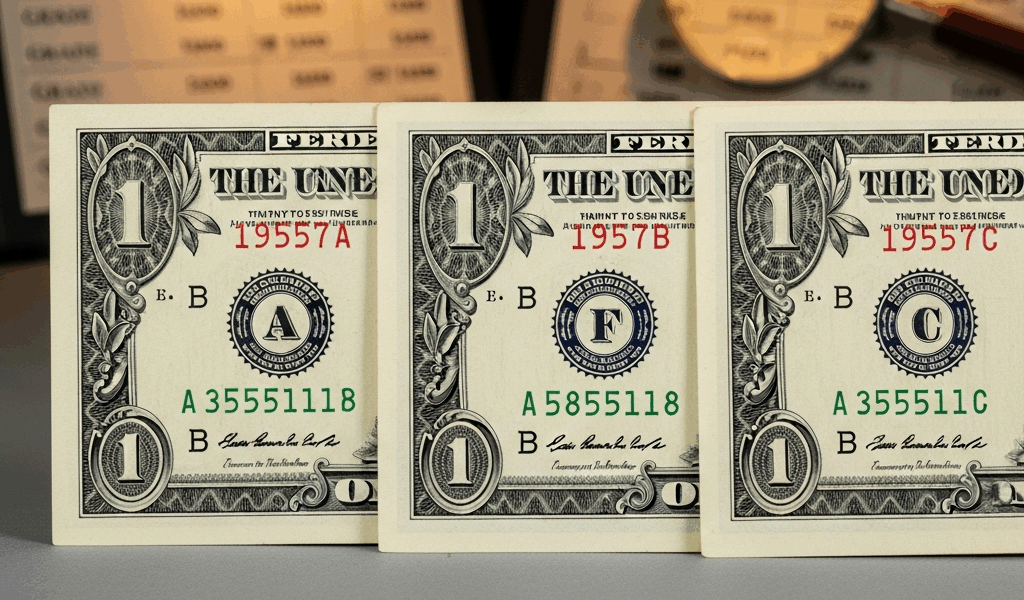
What Makes a 1957 Silver Certificate Different
Collecting old currency has gotten complicated with all the misinformation flying around. People stumble across a blue-sealed dollar in grandma’s desk and immediately Google “rare bill worth thousands” — only to end up more confused than when they started. So let me cut through it.
A silver certificate isn’t just an old dollar bill. In essence, it’s a physical claim against actual silver bullion held by the U.S. Treasury. But it’s much more than that — it’s a remnant of a monetary system where paper money meant something tangible. You could walk into a bank and swap one for its face value in silver. People actually did this. The government honored that promise right up until 1968, then quietly pulled the plug.
The easiest way to spot one? Flip the bill over — actually, don’t even bother. Just look at the seal on the right side of the front. Blue seal means silver certificate. Green seal means Federal Reserve note. That’s the whole test. No tools, no expertise, no guesswork. Every 1957, 1957-A, and 1957-B dollar runs blue. Always.
1957 was the final year the Bureau of Engraving and Printing pushed $1 silver certificates into wide circulation. The A and B variants trickled out into the early 1960s, but 1957 was effectively the last call. Billions of these entered circulation — billions — which explains why so many people find one buried in a shoebox and assume it’s worth a fortune. Sometimes it is. Usually it isn’t. The series letter and the condition are everything.
This article includes affiliate links. We may earn a commission at no extra cost to you.
How to Tell the Series Apart (1957 vs 1957-A vs 1957-B)
Probably should have opened with this section, honestly. The series letter is the first thing any collector checks — and it can mean the difference between a $1.50 note and a $5 note depending on what you’re holding.
Check the bottom left and bottom right corners on the front of the bill. If it just reads “1957” with nothing after it, you’ve got the original. An “A” next to the year means 1957-A. A “B” means 1957-B. That’s it. No letter equals original series. One letter equals variant. Simple.
But what is the practical difference? In essence, it’s about scarcity and demand. But it’s much more than that. The Treasury issued each variant to handle counterfeiting updates or swap in new Treasury official signatures — standard bureaucratic housekeeping. From a collector’s view, the original 1957 carries slightly more demand because the later variants were printed in higher volumes. More notes printed means more survivors today means less scarcity means lower value. Basic math.
Quick Comparison by Series
- 1957 (no letter): Circulated $2–$4, Uncirculated $12–$25
- 1957-A: Circulated $1.50–$3, Uncirculated $8–$18
- 1957-B: Circulated $1.50–$3, Uncirculated $8–$18
Those ranges shift hard based on condition. Keep reading — this is where people lose money by not knowing what they have.
What Your 1957 Silver Certificate Is Worth by Condition
Condition. That’s everything. I’ve watched collectors get starry-eyed over a $1 note they were convinced was worth $50, then watched a dealer slide it back across the counter after one glance at the coffee stain cutting across Washington’s portrait. Heavily creased, faded, written-on notes are worth face value. Period.
These ranges come from Heritage Auctions records and eBay completed sales — actual sold listings, not asking prices — pulled over roughly the past 18 months. Real numbers from real transactions.
Heavily Circulated (Poor to Fair Condition)
This is what most people find. Multiple folds. Faded ink. Soft, rounded corners. Maybe a phone number scrawled near the border in blue ballpoint. The colors are there if you squint.
- 1957 (no letter): $1.25–$2
- 1957-A: $1–$1.50
- 1957-B: $1–$1.50
A dealer will hand you a dollar back and thank you for stopping by. That’s the reality at this grade.
Lightly Circulated (Very Good to Fine Condition)
Handled, but not destroyed. A fold or two is visible — maybe a light center crease. The paper still has some body to it. Corners show wear without being mushy. Colors read clearly. This is the middle tier — the sweet spot for desk-drawer finds.
- 1957 (no letter): $3–$6
- 1957-A: $2–$4
- 1957-B: $2–$4
Worth listing. An eBay auction at this grade moves within a week, sometimes faster if you photograph it well and title it correctly.
Crisp Uncirculated (About Uncirculated to Choice Uncirculated)
Someone folded this once — maybe twice — then put it away and forgot about it. The paper is still bright. The seal pops. No stains, no writing, no tape ghosts. One or two faint fold lines at most.
- 1957 (no letter): $12–$25
- 1957-A: $8–$18
- 1957-B: $8–$18
At this level, PCGS or PMG grading starts making financial sense — especially if you’re targeting the top of that range.
Gem Uncirculated (Gem Uncirculated or Superb Gem)
Never folded. Never spent. Straight from the Bureau of Engraving and Printing into someone’s safe or collection envelope, where it apparently sat untouched for sixty-plus years. Margins are perfect. Colors are vivid. The paper crackles.
- 1957 (no letter): $35–$75
- 1957-A: $20–$40
- 1957-B: $20–$40
Now — check your serial number before you do anything else. If there’s a star symbol at the end of the serial, you’re holding a star note — a replacement bill printed when a standard note was damaged during production. Star notes command premiums at every condition level. A star 1957 in gem condition pulls $150–$300. A star 1957-B in gem grade runs $80–$150. Don’t skip this check. Seriously.
Condition Red Flags That Kill the Value
Certain damage types are instant price killers. Know these before you decide whether listing your note is even worth the effort.
Folds and Creases
One clean vertical fold drops value 40–60%. Multiple folds push a note straight into the heavily circulated tier — no exceptions, no negotiating. If it looks like it lived in someone’s wallet for three years, price it accordingly.
Pinholes and Tack Holes
Someone pinned this to a bulletin board at some point. That tiny hole in the corner is invisible to you and immediately obvious to every collector who looks at it. Dealers knock $2–$5 off for a single pinhole. Don’t make my mistake of listing one without disclosing it — buyers notice and leave negative feedback.
Writing, Ink, or Pen Marks
Initials, dates, account numbers, “PAID” stamps — anything written directly on the note drops you to face value pricing, maximum. No collector wants to frame a note with someone’s grocery list scrawled across Hamilton’s portrait. Or Washington’s. Whoever is on your bill.
Tape Repairs and Scotch Tape Residue
If this note was ever taped back together — even with invisible Scotch tape — it’s done as a collectible. Dealers refuse these outright or offer face value. Old tape leaves a sticky haze that’s visible under any decent light source. Graders spot it in seconds.
Chemical Cleaning or “Washing”
Someone soaked it in water or ran a mild solvent over it trying to improve the look. The paper texture is subtly wrong now — slightly stiff, maybe a touch translucent. The ink reads uneven. Professional graders at PCGS and PMG flag this every time. Don’t bother submitting a washed note. I’m apparently sensitive to this particular issue and have seen it tank otherwise decent submissions.
Where to Sell a 1957 Silver Certificate for the Best Price
Selling platform matters. Match your note’s value to the right venue or you’re leaving money behind — or wasting time on a note that was never worth the listing fee.
Heavily Circulated Notes ($1–$4 Range)
eBay is your platform. List it as “1957 Silver Certificate Dollar Bill” — exactly those words — with sharp, clear photos of both sides. Start the bid at $0.99 and let buyers sort it out. These move in three to seven days. Batch multiple notes together if you can; shipping eats profit fast on a $2 note sold solo.
Lightly Circulated to Uncirculated ($5–$25 Range)
eBay again, but a fixed-price listing works better here — at least if you’re confident in your grading. Photograph both sides, the seal close-up, and the serial number separately. Put the series letter directly in the title. Collectors search “1957-A Silver Certificate” as a specific phrase. Give them exactly that to find.
Gem Uncirculated or Star Notes ($25 and Up)
Professional grading might be the best option here, as selling premium currency requires buyer confidence. That is because a PMG or PCGS slab removes all doubt about grade and authenticity — and slabbed notes routinely sell for 20–40% more than raw notes at equivalent grades. Grading runs $20–$30 per note through either service. After slabbing, list on eBay or submit directly to Heritage Auctions. Heritage pulls serious collector money for currency at this tier.
What Not to Do
Don’t walk it into a pawn shop. They’ll offer face value — maybe a quarter over — and feel good about it. Don’t try a bank. Banks haven’t bought old currency since before most of us were born. Don’t clean it yourself, don’t fold it to inspect the back, and handle it by the edges only. Use a JARLINK 30X 60X loupe to inspect serial numbers and paper condition under magnification before grading. Every time you touch the face of the note with bare fingers, you’re leaving oils that degrade the paper over time.
So, without further ado — a 1957 silver certificate is common. But common doesn’t mean worthless. Grade it honestly, nail down the series letter, and sell where actual collectors are looking. That’s what makes the difference between face value and a real payday.

Stay in the loop
Get the latest bank note buzz updates delivered to your inbox.