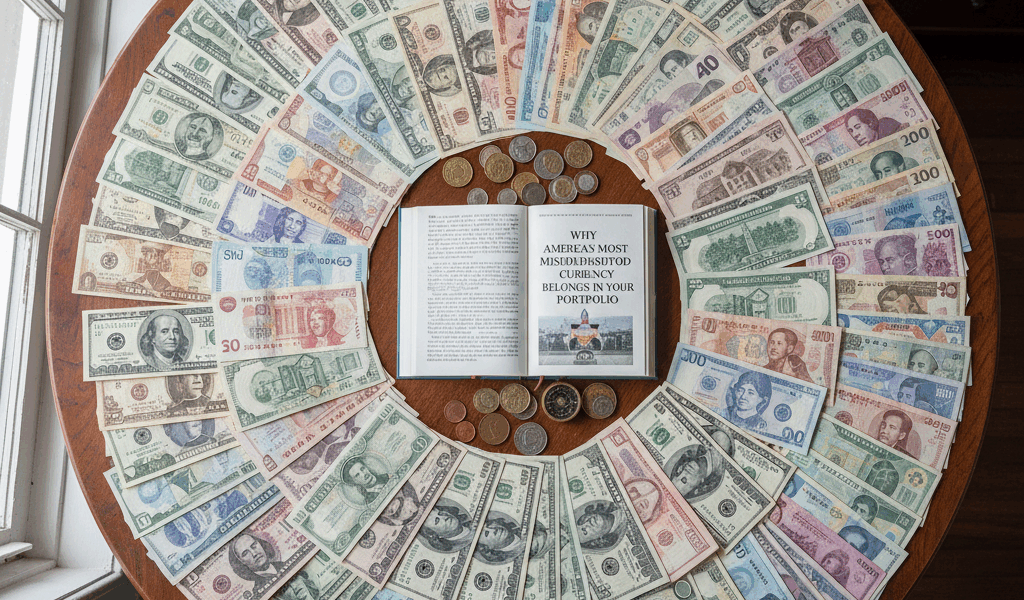
The $2 Bill Paradox: Common Yet Collectible
Walk into most stores with a $2 bill and watch the cashier’s reaction. Despite being official U.S. currency continuously printed since 1976, the $2 bill remains America’s most misunderstood denomination. Some cashiers refuse to accept them. Others call managers. A few have even called the police on customers trying to spend them.
Yet here’s the paradox: the Federal Reserve has printed over 1.4 billion $2 bills currently in circulation. They’re not rare. They’re just unloved—which creates interesting opportunities for collectors.
Why $2 Bills Don’t Circulate
The $2 bill’s circulation problem is entirely psychological. Banks don’t order them because customers don’t ask for them. Cash registers have no slot for them. Businesses don’t request them in their change orders. So they sit in Federal Reserve vaults by the millions.
This self-fulfilling prophecy of non-circulation means many $2 bills stay in pristine condition far longer than other denominations. A crisp $2 bill from 2003 might look brand new because it’s been sitting in a bank drawer for two decades.
Which $2 Bills Are Actually Worth Money?
Not all $2 bills are created equal. Here’s what separates the spenders from the keepers:
Modern $2 Bills (1976-Present)
Most circulated $2 bills from 1976 onward are worth exactly $2. However, look for:
- Star notes (serial numbers ending with a star): $3-$50 depending on condition and series
- Low serial numbers (under 00001000): $20-$100+
- Fancy serial numbers (repeaters, ladders, solids): $10-$500+
- Uncirculated bills from original BEP sheets: $8-$15 each
Red Seal $2 Bills (1928-1963)
These United States Notes carry red Treasury seals and serial numbers. Values range from $3-$5 for worn examples to $15-$50 for uncirculated specimens. The 1928 series is most common; earlier years command premiums.
Large-Size $2 Bills (Pre-1929)
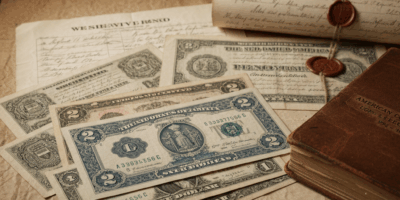
Before the currency redesign of 1929, U.S. bills measured about 3 inches by 7 inches. Large-size $2 bills are genuinely collectible:
- 1917 $2 Legal Tender: $50-$300 depending on condition
- 1899 $2 Silver Certificate (“Mini-Porthole”): $150-$1,000+
- 1896 $2 Educational Note: $300-$3,000+ (one of the most beautiful U.S. notes ever printed)
The First Day of Issue Premium
When the modern $2 bill launched on April 13, 1976 (Thomas Jefferson’s birthday), collectors rushed to banks to get bills cancelled with that date’s postmark. These “first day covers” created an instant collectible. Today, a 1976 $2 bill with an April 13, 1976 cancellation stamp sells for $5-$15—modest, but still a premium over face value.
Building a $2 Bill Collection
For new collectors, $2 bills offer an accessible entry point into currency collecting:
- Start with circulation finds. Ask your bank teller to check for $2 bills in the vault. You might find star notes or interesting serial numbers at face value.
- Focus on one series. Completing a date set (one bill from each printing year) provides structure without overwhelming cost.
- Learn to grade. The difference between “Very Fine” and “Uncirculated” can mean hundreds of dollars on older notes.
- Buy the book before the bill. References like the Standard Catalog of United States Paper Money help you identify what you’re looking at.
Spending vs. Saving: The Collector’s Dilemma
Here’s the honest truth: most $2 bills you’ll encounter are worth $2. The fun of collecting them isn’t about getting rich—it’s about the history, the hunt, and the satisfaction of building a collection of America’s most peculiar denomination.
That said, always check the serial number before you spend one. You might be holding a $50 star note without knowing it.

Stay in the loop
Get the latest bank note buzz updates delivered to your inbox.