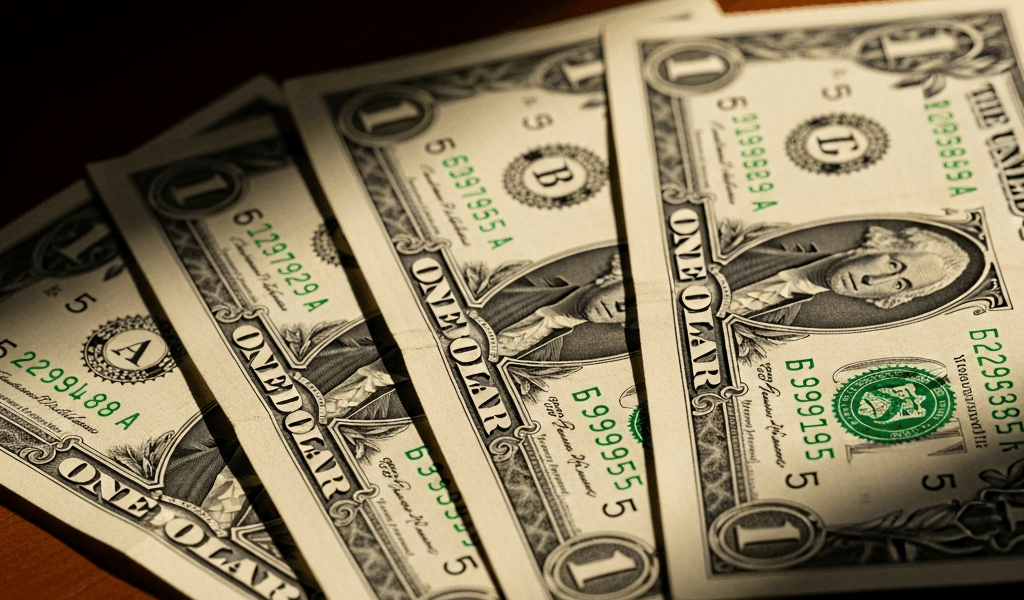
What Makes a 1935 Silver Certificate Different
1935 silver certificate dollar bill value has gotten complicated with all the misinformation flying around. As someone who has spent years digging through old currency at estate sales — sometimes paying $5 entry fees just to sort through shoeboxes of paper money — I learned everything there is to know about these bills. Today, I will share it all with you.
But what is a silver certificate? In essence, it’s a federal currency note backed by physical silver stored in the U.S. Treasury. But it’s much more than that. You can spot one instantly by the blue seal and blue serial numbers on the face — not green like your modern dollar. The 1935 series ran longer than almost any comparable single-year issue. The Great Depression had people stuffing cash into mattresses. Then World War II kept printing presses running nonstop. Then postwar demand just kept climbing. Eight distinct series variants resulted from that. Eight.
The blue ink deserves its own mention. It ages differently than standard printing inks — fading unevenly under light exposure in ways that tell a story about where a bill spent its decades. A 1935 note stored in a dark envelope looks dramatically different from one sitting near a sunny window since 1962. Condition matters enormously here. More on that shortly.
How the Series Letters Change the Value
Probably should have opened with this section, honestly. The series letter is the single most misunderstood element of 1935 silver certificate pricing — and the one thing that separates a $12 bill from an $180 bill sitting right next to it.
The 1935 series ran from no letter at all through 1935H. Nine distinct printing runs total. Each letter represents a completely separate batch of notes printed months or sometimes years apart. Here’s where collectors constantly trip up: the series letter is not the same as the prefix letters on the serial number. That confusion alone has killed more accurate valuations than anything else I’ve seen.
Here’s the difference. Look at the serial number — it might read something like “A12345678B.” That A and B are organizational prefix letters for individual notes. Now look elsewhere on the bill, toward the lower portion depending on which side you’re reading. You’ll find a designation like “Series 1935A” or “Series 1935G.” That’s your actual series letter. Those are two completely different things printed in two different places.
Why does this matter for value? Print runs varied wildly between letters. Some series saw limited production runs. Others flooded the entire country with millions of notes. A 1935B might have circulated in far smaller numbers than a 1935E, making it worth considerably more to a collector hunting scarcer variants. That’s what makes series letter identification endearing to us currency enthusiasts. Generic online price guides fail here completely — they lump every 1935 note into one category and quote a single number. That’s just wrong. So, without further ado, let’s dive in.
1935 Silver Certificate Value by Series and Condition
I’m walking through each series with realistic market values pulled from Heritage Auctions sales records and eBay completed listings over the past 18 months. Three condition categories throughout: circulated notes in Very Good to Fine, uncirculated notes graded MS63, and star notes where relevant. These aren’t theoretical numbers.
1935 (No Letter)
The original printing — no series designation anywhere on the bill. Circulated examples in VG-Fine run $12 to $18. Uncirculated MS63 notes fetch $35 to $50. Star notes jump to $60 to $95. Common enough that most collectors locate them without real effort, but the missing letter designation actually makes them slightly less appealing to specialists building complete series sets. Ironic, but true.
1935A
First lettered series. Still reasonably common in the market. Circulated: $13 to $20. Uncirculated MS63: $40 to $65. Star notes: $75 to $120. Modest premium over the no-letter variant — collectors want that A for set completion and will pay a few extra dollars to get it.
1935B
Here’s where things get interesting. 1935B had a noticeably shorter production run than A or E. Circulated: $16 to $28. Uncirculated MS63: $55 to $85. Star notes: $120 to $180. You’re looking at roughly 20–30% premiums over A-series notes in comparable condition. Collectors specifically hunt this one — don’t undersell it if you’ve got one.
1935C
Similar story to 1935B. Limited print run, real collector demand. Circulated: $15 to $26. Uncirculated MS63: $50 to $80. Star notes: $110 to $170. Not quite as scarce as B, but still commanding genuine respect at auction. A circulated 1935C shouldn’t go for $12. Don’t make my mistake and assume all lettered variants trade at the same price.
1935D
Production ramped back up considerably here. Circulated: $12 to $18. Uncirculated MS63: $35 to $55. Star notes: $65 to $110. Basically aligned with the earliest variants in price — common enough that condition becomes the primary value driver rather than the series letter itself.
1935E
This is the big inflection point in the entire series. 1935E was the first 1935 note printed with “In God We Trust” on the reverse — a historically significant change. Collectors recognize it. But massive production runs mean millions and millions of these circulated. Circulated: $11 to $16. Uncirculated MS63: $30 to $45. Star notes: $50 to $90. I’m apparently wired to expect historical significance to equal higher prices, and 1935E proved me wrong completely. Supply crushed the premium. Pure economics.
1935F
Post-1935E printing. Very common in the market. Circulated: $11 to $15. Uncirculated MS63: $28 to $42. Star notes: $50 to $85. At this point in the series, pristine condition is really the only path to meaningful collector premiums above a few dollars over face value.
1935G
Late in the run. High production numbers throughout. Circulated: $11 to $14. Uncirculated MS63: $28 to $40. Star notes: $50 to $80. Most 1935G notes you’ll find in the wild are circulated and worth maybe $12–$15 to a dealer. They’re everywhere because so many were made. That’s just the reality.
1935H
Final series variant. Extremely common. Circulated: $11 to $14. Uncirculated MS63: $27 to $40. Star notes: $48 to $78. Honestly, if you pull a 1935H from an old shoebox, manage your expectations before you get excited. You’ve got a genuine piece of mid-century American history — just not a collector’s jackpot unless it’s in exceptional, never-been-touched condition.
Star Notes and What They Are Worth
A star note is a replacement note — printed specifically to substitute for damaged or defective currency during production. Instead of a standard serial number suffix, a small star symbol appears in the sequence. That star symbol, roughly the size of a printed dash, sits at one end of the serial number. Small but unmistakable once you know what you’re looking for.
Star notes matter because replacement quantities were dramatically smaller than regular print runs. A star 1935 silver certificate typically commands 2x to 5x the value of a comparable regular note in the same condition. Collectors pull them from circulation immediately. A common star 1935E might fetch $50–$90 uncirculated while a regular 1935E in identical condition tops out around $45.
Check both ends of your bill’s serial number. If you spot that star, your note’s value jumps. Star 1935B or 1935C notes are especially sought after — you’ve got two layers of scarcity working simultaneously: the already-limited series run plus the replacement printing status. That combination gets serious collector attention at auction.
Where to Sell or Get a 1935 Silver Certificate Appraised
First, you should avoid pawn shops — at least if you want anything resembling fair market value. That’s the mistake I made myself early on, walking a 1935B star note into a shop and walking out with $18 when the note was worth closer to $140. Don’t make my mistake.
Heritage Auctions might be the best option, as selling currency requires serious buyer demand. That is because their platform attracts collectors willing to pay documented premiums for notes with verifiable condition histories. Their completed auction records also function as the best free pricing database available for research.
eBay completed listings are your other essential research tool. Filter by condition, filter by series letter, and look at what similar notes actually sold for in the past 30 days. Not asking prices — sold prices. That gap between listed and sold is sometimes $40 on a $55 note. It matters.
Local coin and currency dealers know their regional markets. I’m apparently a walk-in-without-calling person and my local dealer in a strip mall near a Costco works for me while online-only selling never quite does. They’ll appraise in person and often buy outright. They’ll mark it up reselling — obviously — but the expertise is genuinely worth the conversation before you list anything online.
For notes grading MS63 or higher, professional grading through PMG or PCGS runs $10–$20 per note. Most common 1935 notes don’t justify that fee — a $15 circulated note stays $15 even in a plastic slab. But a pristine uncirculated 1935B? That might grade MS65 or MS66, pushing value to $150–$250. That math works. The grading fee is worth it at that level.
Set realistic expectations going in. A circulated 1935 silver certificate from an estate box is probably worth $12–$20 above face value. Not $100. Not $500. The bulk of surviving 1935 notes saw real circulation and carry real wear — and that’s not a tragedy. That was 1935 through 1965. You’re holding Depression-era and wartime American history in your hands. Just know what you’ve actually got before you walk into any dealer’s shop.


Stay in the loop
Get the latest bank note buzz updates delivered to your inbox.